A letter to Guy Garvey, of the popular balladeers Elbow

c/o
The Middle of the Road
Manchester, England

Dear Mr Guy Garvey,

I went to see Prince in concert the other day.
He appeared in high heels, skimpy blouse,
and a manfrock made of velvet and lace,
a suggestive grin all over his face. He was
accompanied by Amazonian dancing girls,
wearing almost nothing bar a pair of roller skates.
I’m not quick to criticise, Mr Garvey, but,
between you and I, it was an absolute disgrace.

His lyrics, meanwhile, were boastful and dishonest
talking about “Purple Rain” and a “Little Red Corvette.”
If only you had helped him, he would have
come up with something decent, more modest
about meeting a slightly pretty divorcee,
at a black pudding stand in Bury market,
and driving her home in a second-hand Corsa
through normal, northern-coloured rain

That wasn’t the worst of it, I’m afraid.
After a costume change, he performed a song which,
if I am not mistaken, was called Soft and Wet,
the dancing girls pawing at his exposed, hairy chest
which display of prurience, I’m sad to say,
gave me a strange swelling between the legs
something which assuredly did not happen
the last time I saw Elbow at Manchester GMEX

I’m telling you, Mr Garvey, by the time that little imp
had finished performing I was dangerously aroused
when I got back home I had to listen to your entire
back catalogue to calm myself down

Mr Garvey. Please show Prince the error of his ways.
Have a word with him, man-to-man, over a packet
of pork scratchings and a pint of real ale. Tell him,
gently, like a portly, northern Gok Wan:

“Prince. If you want to become a man of the people,
with a string of solid yet unspectacular albums
and, potentially, your own show on BBC 6 Music
you need to follow Guy Garvey’s three-step plan.

1. Dress more ordinary, not like a girl
but in loose fit jeans and lumber shirts
2. Get rid of that funky afro; replace it with
a nice monobrow and pudding bowl
3. Stop performing like an eroticised Cocker Spaniel.
Perform sensibly, like me, as if you’re idea of fun
is reading a fridge freezer owners’ manual.”

Because watching a pop star on stage should not
undermine anyone of mixed ability. It should
be like watching telly on the sofa, with more
extensive toilet facilities. At the end of a concert,
people should know that all dreams are feasible,
all dance moves achievable, all footwear
comfortable and, something you demonstrate
brilliantly, Mr Garvey, all waistlines expandable.

Yours, dreaming of a more normal, ordinary future,

Richard Purnell

Chicken drumsticks or Kievs for dinner? - Guy Garvey has a quiet moment on stage
Drumsticks or Kievs for dinner? – Guy Garvey has a quiet moment on stage
A disgusting, prurient display - Prince in concert
A disgusting, prurient display – Prince in concert

Who’s worse – Shearer or Suarez?

A day after Luis Suarez bit Giorgio Chiellini, the little Uruguayan finds himself, improbably, on the moral high ground.

Not due to anything he has done, of course. Biting an opponent is wrong. He knows that; so does everyone else.

But how wrong is it? You would think, listening to the intemperate reaction of the BBC’s suite of pundits, that it put him in the Harold Shipman league of criminals.

Alan Shearer says that Suarez should be banned “for as long as possible.” (Is that until death or does it include any potential after-life, Alan?)

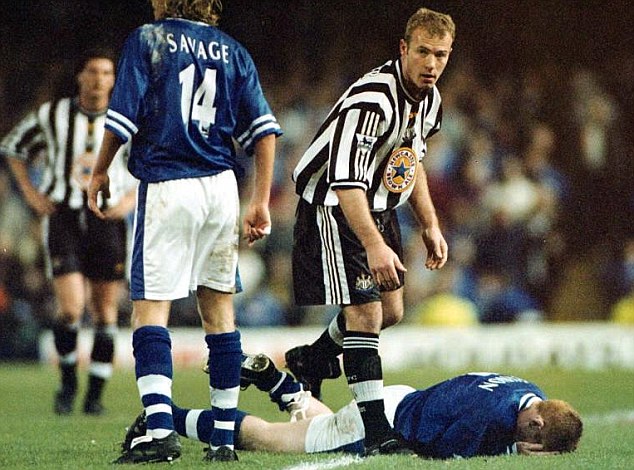
I wonder what Shearer would say if Suarez had, instead of biting an opponent, which caused Chiellini almost no discomfort, kicked a player in the face when they were lying on the ground. Considering that sort of attack would inevitably have greater force and greater chance of injury, that must be worse, right?

Of course, lovers of English football will know that I am referring to Shearer’s own attack on Neil Lennon during a match between Newcastle and Leicester City in 1998. Shearer, then England captain, received no punishment for the incident. An enquiry, which heard from then-England manager Glenn Hoddle, decided there was nothing much in it.

As Shearer was England’s most important player at that time, the FA saying that he was not guilty had more than a faint whiff of self-interest about it. An England captain, it was decided, would not do that sort of thing. Shearer, reported the enquiry, “swinging out with his left leg was a genuine attempt to free himself.” Which is a bit like the old joke by Bill Hicks about the officers who attacked Rodney King, saying that if you played the tape backwards you could see the officers helping King up and sending him on his way.

Sitting alongside Shearer was Robbie Savage, who had got away with kicking opponents “so many times,” according to Thierry Henry. Savage said that Suarez should “never play international football again” which, considering he is 27 years old, would amount to a ban of anything up to 10 years.

"Yes, I saw you, but I won't say anything" Shearer and Savage in their 90s heyday.
“Yes, I saw you, but I won’t say anything.” Shearer and Savage thuggin’ back in the 90s.

That would be by far the worst punishment for any player in the history of football, worse than Eric Cantona’s nine month ban after he karate-kicked a Crystal Palace fan in 1995.

These double standards typify the British approach to punditry, where our lads are forgiven whenever they err in judgement, where the foreign player, such as Suarez, gets met with fury and calls for him to be driven out of the game. This lingering feeling of British exceptionalism, that we don’t dive, and are morally more upstanding, in the face of all evidence to the contrary, is part of the reason that other teams inevitably seem to play that little bit better against us.

(That, and our war-mongering. One of the main reasons Maradona was so motivated to do well against England in the 1986 World Cup was in response to the injustices meted out to his countrymen during the Falklands War. Therefore, while his second goal, where he took on the entire England team is more celebrated, his Hand of God goal, where he hand-balled into the ball into the net, is his personal favourite.)

Why ever would he want to cheat against blameless England? Maradona in 86

While Shearer and Savage declare that Suarez should be banned for anywhere between life and as long as possible (whichever is longer) they should be honest and admit that this incident, while unsavoury, is no worse than the darker moments of their own careers. And perhaps they should spend less time attacking Suarez and more time contemplating why Uruguay, a country of fewer than four million people, should produce a football team which, according to the evidence of last Thursday, is comfortably better than our own.

Where have all the centre backs gone? England at the 2014 World Cup

There has been a lot of talk of British values recently, and the wide-ranging debate shows that it is largely a matter of opinion what is a British value and what is not.
That said, there is one British value which is beyond question: that of big centre-halves heading footballs and generally acting with a courage which happily boils over into full-blown craziness. When faced with someone smaller and more skillful, the English way is to use our brains not to out-think our opponent, but as an all-purpose blocking device.

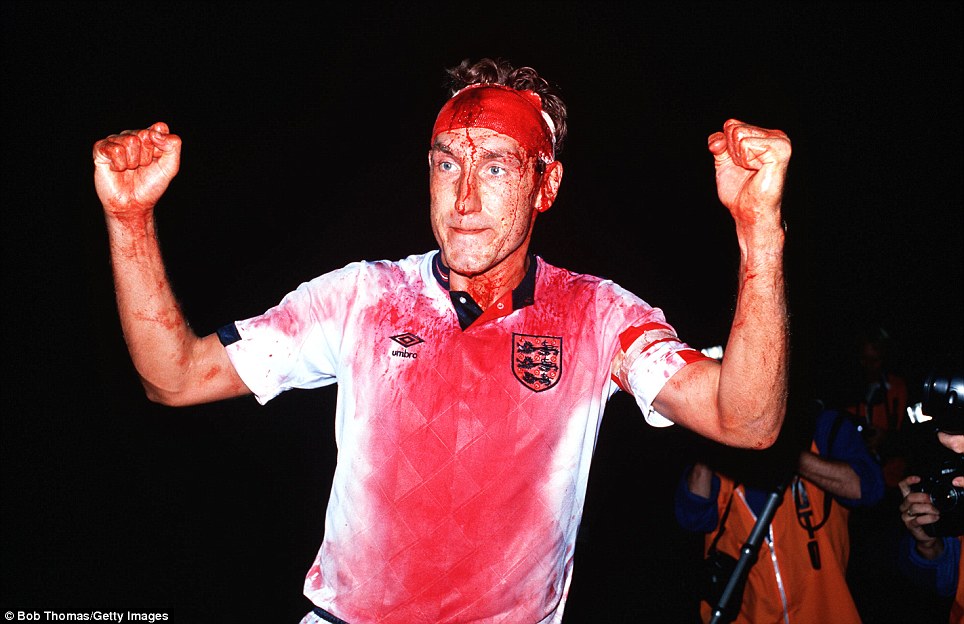
We have always been knee-deep in this kind of unsubtle, fairly terrifying type of footballer: in my memory, this long line of lunatics begins with Terry Butcher and carries on through Tony Adams, Martin Keown, Steve Bruce, Sol Campbell, Jamie Carragher and John Terry, with the addition of two centre halves who could also, astonishingly, play football – Rio Ferdinand and Ledley King.

Lunatic: Terry Butcher displaying British values

It’s worth noting that Steve Bruce, despite being a mainstay of Manchester United’s defence when they first started winning everything, never played for England. We simply had too many big, thuggish lads to get their heads on things, and so he was not required. Similarly, Jamie Carragher, who played 500+ times for Liverpool and won the Champions League, retired from the international game because he couldn’t get in the team.

Centre halves have always been the foundation of English football. In 1990, when we got to the semi-finals, Bobby Robson, in his wisdom, picked three centre-backs – Des Walker, Terry Butcher and Mark Wright – and another centre-back, Paul Parker, at right-back.

Let’s remember that at the group stage, England conceded one goal in three games, with clean sheets against the Dutch and Egypt. In total, we conceded four goals in six games – the same number of goals conceded in two matches at the 2014 World Cup.

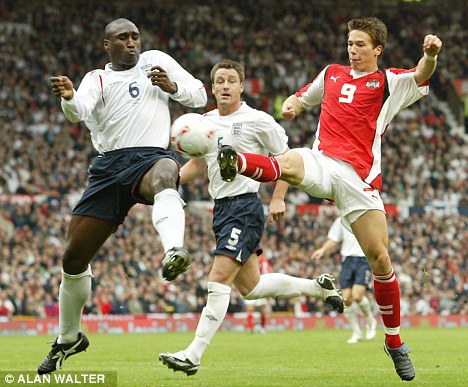
Getting in the way - Sol Campbell
Getting in the way – Sol Campbell

In 2002 and 2006, Sol Campbell was named in the World XI at the end of the tournament, the only Englishman to gain that honour. What did he do to gain the world’s admiration? What England have always been better than anyone: getting in the way of shots, heading away crosses and, occasionally heading goals from set-pieces.

Which is why it is so sad to see Rio Ferdinand – one of the greatest English footballers – sitting in the BBC studio last night having to explain where it went wrong against Uruguay.

His analysis, to paraphrase, was this: Johnson, Jagielka, Cahill and Baines were not good enough. For the first goal, someone should have blocked the cross, and if it got into the box, someone should have headed it away. For the second goal, a defender should have headed the ball away, and if not, been in a position to block the shot.

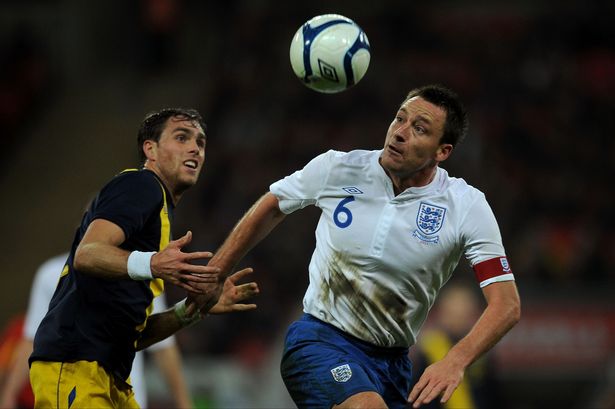
That’s what Englishmen have been doing for decades. That’s what Jack Charlton did in ’66, what Butcher did in ’90, and what Adams did in ’96 (three goals conceded in five matches). The fact that our only properly good defender, John Terry, is currently heading beach balls rather than playing for England is perhaps the main reason for our utter defensive ineptitude at this World Cup.

While it is all very well wanting our national team to play more expansively the focus must be having a squad packed with robust centre-halves who will do anything to block shots and crosses.

Those are the values we must remember, before we try to do anything so frivolous as trying to score goals. So, if Mr Gove wants to become a populist figure, perhaps he should, after children have had double-Dickens in the morning, insist they have heading practice in the afternoon, so we can ensure that no England team will be so sadly weak at the back again.

The last of a noble lineage: John Terry heading a football

Extremism? Or British values in practice?

I’m coming a bit late to this issue of extremism in English schools, so forgive me if I’ve not grasped the whole situation.

It appears that a few people, who originally come from former colonies, have come to Britain and then asserted themselves in positions of power, namely on the governing bodies of schools in Birmingham. Once they had gained power they began to dictate a quite different leadership style than those schools had been used to.

Apparently, this has turned into something of a furore, and certain people are saying that these extremists are not displaying good British values.

Well, to that, my grandmother, who was British herself and lived in Yorkshire all her life, would say: “Give over, lad!”

If going to a country, getting into positions of power and then telling the locals how things are done aren’t traditional British values then this isn’t the country I know and love.

Perhaps instead of knocking these people, we should applaud them for echoing our own highly effective policies which, lest we forget, built our empire and made Britain great.

Feast

Richard Purnell's avatarAVERAGE FOOD BLOG

feast (1)

I was at the Barbican recently, watching some high-end jazz piano, which was so-so if truth be told, and in the interval I was looking for a livener

and you know, because you are in a major arts venue, they have one of those glass-fronted freezer cabinets full of little pots of ice-cream, with flavours which dress the thing up, such as Madagascan Vanilla and Dulce de Leche, giving you the feeling that if you weren’t out of your depth with the extended jazz improv shit going on in the hall, you certainly would be with the ice cream, retailing at a modest £3.45.

After a moment of reflection, I concluded: fuck all of that. When there’s only a 95p difference between your miniature pot of ice cream and a bottle of overpriced bevy, the ice cream is not getting my vote.

This preamble is by way of outlining how…

View original post 406 more words

A trip to the shops…notes from Yerevan, pt. 2

You know those people who take acid, the ones who take acid and can’t stop talking about how they took acid and had the most transcendental experience, and saw the world with new eyes, and everything that was drab and boring was now magical, and you say, magical how, and they say, well, I was sat in my room, listening to flute music, staring at my shoe, and you say, that shoe, and they say, yes, that shoe, I looked at that shoe for eight hours, just looking at it, the eyelets and the stitching and the leather upper, and I saw that even this shoe, where did you get it, you say, and they say, it doesn’t matter where I got it, and you say, okay, even though you think it does matter, and they say, if you must know, these are Clarks, and you say, I thought they were Clarks, I’ve always thought Clarks shoes could change your life like that, and they say, you’re not taking this seriously, are you, and you say, no, you’re not, and then they tell you to fuck off and that’s one less boring cunt in your life

well, the point is, those people, the boring LSD people, have a point. When I’m on holiday, I do as little as possible, and am fascinated by everything. This is how I enjoy myself. On my first day in Armenia, I went to the shops and bought some bread and cheese, and other bits and bobs like that. And it was the most interesting thing I did all day. It was also the only thing I did all day.

I was somewhat nervous going in there, despite it being quite a westernised supermarket, because I can’t speak Armenian, and they have their own alphabet, (some wise chap dreamt it up in the fifth century), so I was hobbled when it came to knowing what is what. Moreover, I haven’t got the shopping stature of one of those old women who can walk into any shop anywhere in the world and start feeling the produce to see what is fresh and haggle mercilessly with the shopkeeper until they end up paying below wholesale price for their vegetables, and the shopkeeper thanks them for it. I’m not like that. When shopping, I’m timid, yet curious.

Despite these reservations, I got my trolley and trundled into the shop. First section, vegetables. Which, being a vegetarian, is my domain. (Like the Americans so endearingly say: “I GOT THIS!”) I picked up tomatoes, onions and carrots, which a shopping assistant weighed and put into bags for me.

Next, I went down an aisle which could be described as: tins/jars. I found myself staring at tins of kidney beans, wondering if I needed kidney beans (does anyone ever need kidney beans), and if 720 dram was a reasonable price for them, when another shopping assistant appeared and asked in Armenian, then Russian, then English, if she could help.

First of all, coming from London where you can go to the supermarket, fill a basket and pay for everything without speaking to a soul, I was astonished to be asked. Getting to the question, however, the truth was, I am beyond help. What person gets transfixed by cans of kidney beans and stares at them for several minutes wondering if they want them or not? What kind of help could she provide? A week in a sanatorium, perhaps? Thinking the truth somewhat beyond the language barrier, I politely declined and shuffled off

to the dairy section, where another jovial shopping assistant was handing out free samples of President butter. Which is just the kind of free sample the right-thinking supermarket shopper wants to have. As an endorsement of the promotion, I plonked a block of the good stuff into my basket, which, in an Armenian supermarket dairy aisle kind of way, made me quite the Billy Big Bollocks.

Then there was the 33.3% of the supermarket devoted to pig. On my flight from Moscow, I had noted several men with extremely generous waistlines and wondered how they had acquired such impressive physiques. Here was the answer. Sausages, bacon and hams ran across several counters, all attended by larger shopping assistants than were found on the aisles, as if to suggest: “if you buy this, you could end up looking like this!”

After buying bread and picking up a selection of the local ales, I went to the till to pay, where a woman took my money, and a man packed my bags and wanted to carry them to my car, until I explained I didn’t have one. So, despite my complete lack of Armenian, I had a supermarket shopping experience which is not possible in England, due to improvements. And with those cultural differences to reflect upon, I took the rest of the day off.

Meeting the neighbours…notes from Yerevan pt. 1

Tpagrichneri, str., Yerevan, Armenia

I am woken by the door bell being rung repeatedly, the same bell I had ignored on my first morning in Yerevan. Today, I scramble into t-shirt and trousers and answer the door, to find a small, severe, grey-haired woman, all handbags and narrow eyes, stood there. She speaks in tones equal to her appearance, first in Armenian, then in Russian, at which point I declare that I am English and, consequently, haven’t a clue.

She takes my lack of understanding as a ploy, and not a very good ploy, and we are both talking across each other, she jabbing her finger at me, me lifting my shoulders and showing the palms of my hands, Larry David-style, when an elderly gentleman appears from across the hall and asks, in English, if I am English.

“Yes,” I confirm.

He gives a wave of the hand, as if to say, leave all this to me, and picks up the thread with the old lady. After a few moments he reveals that she is a tax collector, which doesn’t surprise me in the slightest. If ever there was a woman who was purpose-built for scaring people into handing over their hard-earned, this was the woman. I give her a phone number, and she retreats down the stairs, displeased but, temporarily, defanged.

I turn to the old man, suntanned, baldheaded, charming, and after exchanging names and handshakes, he says, “I am leaving Armenia…I have a brother in California…the Russians, they are coming…I remember the Soviet days, not good…they want to build another empire, they are too strong…we cannot stop them.” I agree in a noncommittal way (just in case there are any Russians lurking on the stairwell, taking notes), before we return to our respective flats.

***

Later that day, the doorbell rings again, and once again I am woken by it, despite it being early afternoon. (I’d had a late breakfast, and subsequently gone to bed to read, and – would you credit it, I mean would you?? – dozed off.)

It is the suave old man from across the hall. He invites himself in and sits down delicately on the sofa.

“You are tired, maybe?” he asks, and I deny it, although I can feel that my face is red and blotchy from sleep. I sit up, cross-legged on a chair and look attentively at him, in his old man summertime clobber of polo shirt, khaki trousers and tennis shoes.

“Perhaps you would like some work…smuggling?” he says to me, enquiringly. “My friend has an Iranian passport and it is very easy.”

I look at him as if he is a character in a Graham Greene novel, which, given his vintage, isn’t impossible.

“I am on holiday,” I say, which he ignores.

He proceeds to talk in a casual, elegant, if mildly intimidating fashion about The Russians, Iran, the Twin Towers, The Russians again, Edward Snowden and British spies of yesteryear, the Taliban, a forthcoming terrorist attack in London, which will happen, very soon, The Russians yet again, before waving his hand and summarising with, “these things, they are connected.”

I wonder if I should ask some questions about the type of smuggling he had in mind, and what the pay might be, but think better of it as it might encourage him, or, worse, make me laugh. Either way, I keep quiet.

Eventually, he asks, “Why are you in Yerevan?”

“I am on holiday,” I say again. “I might go to the museums and galleries.”

“Museumgallery, yes you might go,” he says, dismissing this as implausible. “And what is it you do?”

“I work in PR.”

“Public relations?” He muses upon this for a while. “Well, if you want to earn some money, you know where I am.”

And with that, the elderly gentleman rises, shakes my hand, and leaves the flat.

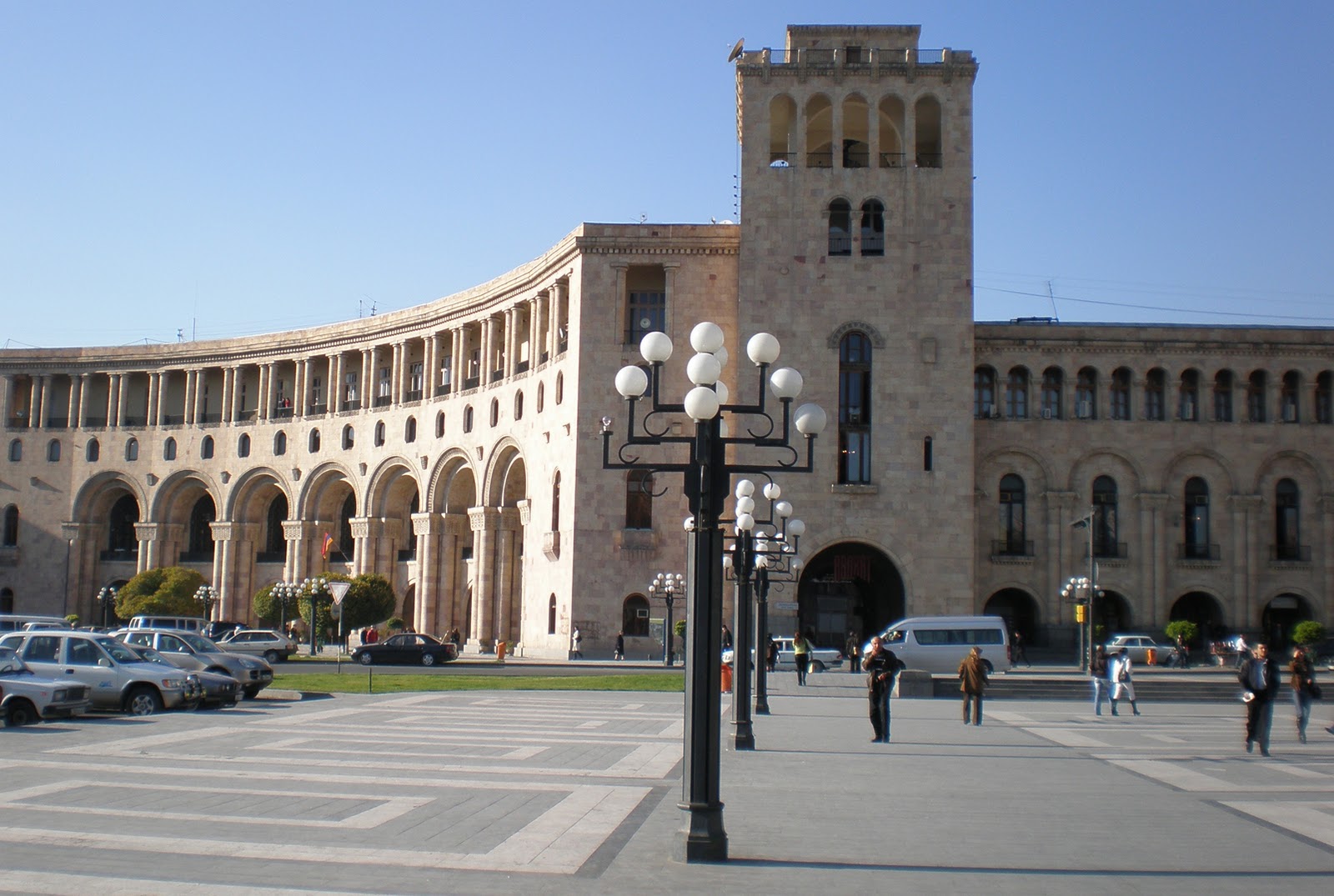
Yerevan's lovely central square. My flat, me and my neighbour are just off to the right somewhere.
Yerevan’s lovely central square. My flat, me and my neighbour are just off to the right somewhere.

Yes, really, a poem about daffodils in the spring-time

Daffodil-flowers-30709818-1600-1200

Yellow daffodil, how uninspired you are
year in, year out
it’s always the same with you, isn’t it?
Always the same gaudy yellow
a colour once bright and joyful
made drab by its predictability

One would think, wouldn’t one
that one could shake things up a bit
a bit of black piping
a few white spots, perhaps
but no
new season is always old season with you

People might say, ‘So nice to see the daffs back again!
I might write a poem about them!’
They would be lying, yellow daffodil
they would be humouring you, with English politeness.
Behind your back they are saying terrible things
terrible, nasty things
comparing you unfavourably to the geranium
lower even than nettles, with their supposed life-giving properties

What do you give, yellow daffodil?
What do you give, apart from a gentle reminder of springtime past
a splash of colour where previously there was none
a glint of sun-like warmth, hinting at the summer to come?

In fact, yellow daffodil, forget we had this conversation.
Carry on, as you always have done.
On your way out, could you leave the door open,
and send the chrysanthemum in?
I need a few choice words with him.

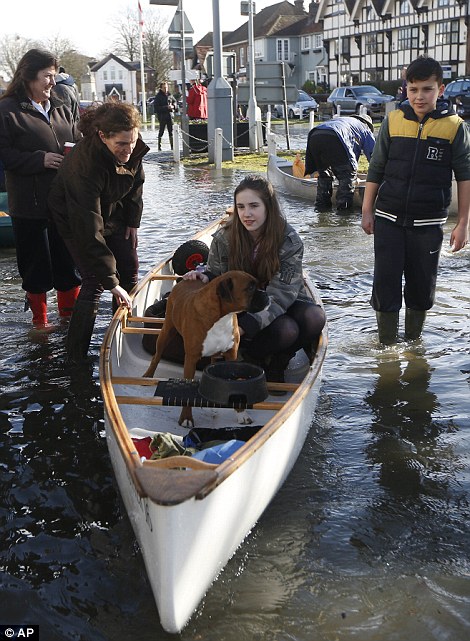
Solutions to the flood crisis: an open letter to the Daily Telegraph


Middle-class people flooded: who is to blame?

Dear Sir,

While it is right for leading thinkers within the Government, such as Eric Pickles, to call on Lord Smith, the chairman of the Environment Agency, to resign, rightly blaming him for his role in the flooding of homes built on a flood plain, it is clear that Smith is not solely to blame. Yes, he is responsible for spending the money the Government hasn’t given him for the dredging of rivers and maintaining flood defences.

However, while it is inarguable that Smith must go, is there not a greater culprit? We are thinking, in particular, of the gentleman directly responsible for the rain, the wind and the waves. And that responsibility, as we all know. lies solely and squarely with God.

God, in his infinite wisdom, has decided to deliver incessant rain, not on Labour voters in Scotland, the North and the Welsh valleys, but on Middle England, where the decent, hard-working, Tory-voting rich people live!!!

Let us be fair. God isn’t getting any younger, and we should all respect our elders. But when He utterly fails to discriminate between the dole-blagging Scottish and the Southern English, serious decisions must be taken.

Therefore, we modestly and meekly propose that God, while having done much good, in particularly in His creation of England, public schools and the game of cricket, should be allowed to step aside and make way for someone with new ideas, someone who knows right from wrong, right from left, and rain from shine.

That new man, we feel, should be a woman. And that woman is Mrs Thatcher. At first glance, Mrs Thatcher might be a controversial choice. For one, she is widely believed to be dead. But those rumours are wide of the mark. Yes, her earthly body has slowed down over recent years, but her spirit very much lives on.

We, the Southern Anglican Thatcher-Inspired Seekers of Freedom from Immigrants and Environmental Distress (SATISFIED) passionately believe Mrs Thatcher is the right person to get our weather systems in order so that rain pours unremittingly on the northern mining towns, and on southern England only during the latter stages of Test matches when the English cricket team is trying to stave off defeat against one of the colonies. This will ensure that this country gets back in order so that we can carry on accumulating wealth, eating roast beef and bulk-buying Barbour jackets.

Sincerely yours,

SATISFIED (Datchet branch)