Back in the saddle: Frank Skinner live (review)

The photographer has left a space for David Baddiel to be photoshopped in.

I like Frank Skinner.

I like him because he reminds me of the 90s, that more innocent time when Tony Blair was popular, the use of combat trousers were being revolutionised by the All Saints and curtains were considered to be a perfectly acceptable haircut. (I should know, I had a lovely pair myself.)

Skinner’s contribution to that Age of Innocence was co-writing, with David Baddiel and the Lightning Seeds, the song Three Lions in which they propagated the fictional idea that England could win at football. No less significantly, he pioneered an entirely new art form: that of Witty Banter, whereby men in their 20s and 30 sit and talk (either behind desks or on a sofa) in an unscripted, hilarious way about things they know nothing about.

Considering the above, Frank Skinner’s cultural significance in a fin de siecle context is absolutely secure.
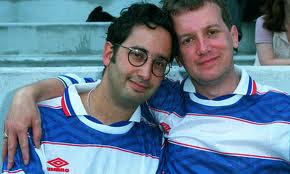
Frank Skinner giving David Baddiel a hug for having the decency to shave his goatee off

But, trouble is, he’s still alive and kicking in 2013, at the age of 55. The TV work has dried up, and he’s got a baby at home, which means he needs to get out of the house more often. Hence, this return to stand-up at the Soho Theatre ahead of a full UK tour later in the year.

Right from the off it it was clear that the dichotomy of being rich, famous and comfortable, while having a stand-up act which relies heavily on him being an ordinary, honest bloke from the West Midlands, was weighing heavily upon him.

In the first fumbling minutes of the show, he confessed to all of this in a manner as awkward and nervous as a teenager on a first date (it’s no surprise that the only person he built a bit of rapport with was a 16-year-old who had come along with his mum because he liked Three Lions).

Some of his ‘topical’ jokes were as bad as anything I have ever heard, and poorly delivered as well. One about racehorses involved in the horsemeat scandal – “One minute they were under starter’s orders, the next they were being ordered as a starter” – was terrible, and made worse by him effectively giving the punchline away in the build-up. A bit rusty, shall we say.

The gig picked up in the second half when he started to swear a bit and talk about oral sex. He also raised an important moral question: If Shakin’ Stevens developed Parkinson’s would it still be okay to call him Shakin’? As a leading moral poet – known formally as a moraletrist – I was delighted that he consulted me on this matter.

My answer was clear: Yes. Because it is factually accurate.

I wanted to explore the matter in more detail, and share with him some moral questions I have successfully wrestled with over the years (such as: is it right to call a spade a spade if that spade is indeed a spade?), but he needed to get on sprinkling comedy gold about.

It is true that this show didn’t really have a beginning, or an end, or much of a middle. But Skinner shouldn’t worry, because I have developed a three-step plan to help him out.

1. Forget the topical material. You’re out of touch, Frank, and you know it.
2. Talk about the olden days: the 90s, the Spice Girls and their opposite numbers, the Spice Boys. Those days were good and people, particularly young people who were in push-chairs at the time, should be constantly reminded about them. Three Lions was a great song, despite what it sounds like.
3. Be realistic. You won’t win any comedy prizes with this show but, with a well-organised defence and a touch of luck, you might get a quarter-final spot. Which, as Sven Goran-Eriksson taught us, is still a very good result, given the available raw materials.


The poet Tshaka Campbell and a joke about integrity

Tshaka Campbell
Tshaka Campbell

“I’m big into integrity,” said the poet Tshaka Campbell. “I’m not going to write about something like an abortion from a woman’s perspective because there is no way I could know what that is like.

“I don’t like poets who write a break-up poem and you say, ‘have you ever broken up with someone?’ and they say, ‘no!'”

Tshaka shrugged, and smiled, as if to say, “how ridiculous is that – to even think to do something like that?” And many of the crowd at Bang Said The Gun, a popular spoken word night in south London, laughed with him.

I didn’t laugh. I didn’t laugh because I was too busy wondering exactly how dangerous a joke like that is. He was effectively saying, in a flippant, light-hearted way, that if you haven’t directly experienced it, don’t write about it.

Which set me thinking: would he have told Hubert Selby Jnr to not write the rape scene in Last Exit to Brooklyn because he was not rape victim nor rapist? Would he have told Patricia Highsmith not to write The Talented Mr Ripley because she had no direct experience of murder? Would he have stopped Shakespeare from writing anything but the occasional poem about his early years in Stratford-upon-Avon?

I suspect not, because he would see that these were serious writers and would do what he could to encourage them. So I do not believe that he meant this joke to be taken as a general truth.

However, even if we look at the specific example he sets – that of the poet writing a break-up poem without having experienced a break-up – we can see that even this is wrong. For example, we know that Morrissey was famously celibate and had no boyfriends or girlfriends during his songwriting heyday in the 1980s.

That didn’t stop him writing one of the greatest love songs of all time, There is a Light That Never Goes Out. He was able to write this song, not because of a love that he had directly experienced, but because of his unique sensitivity to the human condition.

To give Tshaka the benefit of the doubt, he might have meant that if a writer writes about a difficult subject – a break-up; an abortion – and does not fully think through the subject, then poor quality writing is almost certainly the result. But that could equally be the case whether someone has experienced something or not – anyone who has been to a few open mic nights knows that.

Tshaka Campbell has been writing poetry for 20 years. The crowd was full of people there to see him, the headline act. Many were no doubt writers or aspiring writers, likely to be influenced by this charismatic performer and therefore take his ill-judged joke seriously.

I would be really sad if an aspiring writer came away from that night and decided to steer clear from daring, imaginative work, and write only from their own experience, because they believed it more artistically credible to do so.

The present glut of poets, and Campbell is not one of them, who seem to only write in the first person, suggests that the ‘only write from your own experience’ philosophy has its adherents. What I would like to see is more poets bravely experimenting with different styles and techniques – developing characters, writing from unusual perspectives, using satire and irony – before hitting upon a style which suits them.

As the songwriter Conor O’Brien, from the band Villagers, said in a recent interview:

“It was Dylan who made me realise that you could just lose your mind a little bit, and sometimes when you’re adventurous and you have that spirit in you something quite fundamental comes out.”

Which seems like a much better piece of advice for a writer than telling them what is off limits.

So perhaps Tshaka Campbell should impose a small limitation upon himself: stick to performing his often brilliant poetry, and leave the jokes to the comedians.

Jerusalem artichokes: a short story

Recently, during my weekly shop in Streatham Sainsbury’s, I was searching for the Jerusalem artichokes. When I found them, I noticed there was only one bag left. As I reached to get them, a small Muslim lady elbowed me out of the way and grabbed them for herself.

“Hey!” I said. “Give those back, you vicious, uncivilised Muslim.”

“Who are you calling vicious, you big-nosed Jew,” she said, insulting me without any provocation whatsoever.

I didn’t rise to the bait and very politely said, “Would you please give me them back?”

I knew what the answer would be, so I grabbed the artichokes from her basket before she had chance to reply. Unfortunately, she was quicker than she looked and we both had a strong grip of them when the store manager, and my golf partner, Theodore Yankee, appeared at my side.

“What’s the problem, Richard?” Mr Yankee asked.

“Nothing at all,” I replied. “This lady wanted the last bag of Jerusalem artichokes and, despite me having them first, I was just giving them to her.”

“That’s very decent of you.”

“Yes,” I said. “But I would like one small thing in return. I’d like the lady to cook me a meal, using the Jerusalems, then we’ll say no more about it.”

“What a wonderful idea,” said Mr Yankee. “That should even things out.”

After no little encouragement, the lady agreed. I went back to her house in Streatham Vale, and watched TV while she prepared a Jamie Oliver recipe, using the Jerusalems.

The meal was delicious, but at the end of it, I still didn’t feel as if I had been fully compensated for my loss. That being the case, I decided to stay in her house, keeping the lady under house arrest while she catered to my every need. Things were going quite smoothly when, after 10 days, she told me that all the food in the house had run out.

“Why don’t you let me go out and get some supplies?” she asked.

I thought the question impertinent, so I tied the woman up and set her house on fire, before heading off to Sainsbury’s myself.

When I got there, I bumped into my old friend, Theodore Yankee. I explained what had happened and he agreed that while my actions were firm, they were totally fair, given the provocation I had endured.

I thanked him for his understanding my position. I added that, on reflection, it was only reasonable for me to receive suitable compensation from Sainsbury’s itself. Mr Yankee agreed, and said I could have free Jerusalems delivered to my door each week, for life.

I was disgusted at this derisory offer and told him so.

“Theodore,” I said, “your offer is all very well for myself, but what about my children, and my children’s children? Do they have to come to Sainsbury’s and suffer cruel insults at the hands of Muslims? Do you think it is right that innocent children should be punished in this way?”

Theodore saw that my point was a fair one and ensured that my family would get free Jerusalem artichokes and free delivery of their weekly shopping in perpetuity.

We shook hands and I walked home feeling that, after a long, hard struggle, justice had finally been done.

A much-coveted vegetable: the Jerusalem artichoke

My favourite writer got crushed by an Israeli bulldozer

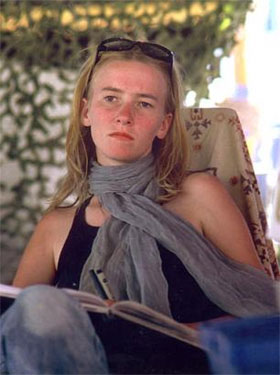
A true hero – Rachel Corrie

It’s easy to hate the Israeli state. They do bad stuff and don’t even give enough of a shit to  create coherent excuses.

The Israeli state is like the little brother in year seven whose bigger brother is in year eleven and is Mike Tyson. They aren’t that hard, but they can do whatever they like and get away with it.

It’s such an obvious, acknowledged truth that very few people bother to point it out, or pay attention.

I rarely pay attention. I’m too busy being incredibly witty and ironic to worry about Israel. And in any case, the kind of people who worry about Israel have nothing better to do than worry about stuff they can’t change.

I certainly wasn’t paying attention when Rachel Corrie was crushed to death in 2003 at the age of 23 by an Israeli bulldozer when she tried to stop it destroying a Palestinian home.

I wouldn’t have paid attention at all, but it turned out that Rachel Corrie, in writings which amout to a few diary notes and emails home to her parents in Washington state, was one of the most brilliant, funny, honest and idealistic writers I have ever come across.

Her story was told in a play produced by the Royal Court theatre, which I had the privilege to see a few years back. Remarkably, it was almost entirely produced from her own writing.

Here is a sample:

When we graduated fifth grade we had a list of questions for our yearbook. One of them was, ‘What do you want to be when you grow up?’ Everyone wrote something like ‘doctor’ or ‘astronaut’ or ‘Spiderman’ and then you turned the page and there was my five-page manifesto on the million things I wanted to be, from wandering poet to first woman president. That was real cute in fifth grade but when it’s ten years later, I’m a junior in college, and I still don’t have the conviction to cross Spiderman off my list – well, you can imagine it gets a little nerve-wracking.

This is a woman who was so aware of her own ridiculousness that she could inherently spot the ridiculousness in others, such as the Israeli state. So when she learnt, with horror, about the type of stuff that was going on in Gaza and the West Bank at the turn of the century, she didn’t just sit back and take comfort in her small-town environment in the US. She tried to raise awareness locally; and, when that wasn’t enough for her, she went over there to bear witness. And when she does so in her writing it is with the same humanity and candour as Vasily Grossman at the Battle of Stalingrad.

Diary entry:

7th February 2003

I have been in Palestine for two weeks and one hour now, and I still have very few words to describe what I see. I don’t know if many of the children here have ever existed without tank-shell holes in their walls. I think that even the smallest of these children understand that life is not like this everywhere.

They love to get me to practice my limited Arabic. Today I tried to learn to say ‘Bush is a tool’, but I don’t think it translated quite right. But, anyway, there are eight-year-olds here more aware of the workings of the global power structure than I was just a few years ago – at least regarding Israel.

A month later, her somewhat jolly descriptions have turned inescapably darker. The place has changed her and, perhaps, she foresees an endgame.

An email from March:

Mom.

I have bad nightmares about tanks and bulldozers outside our house, and you and me inside. Sometimes the adrenaline acts as an anaesthetic for weeks – and then at night it just hits me again a little bit of the reality of the situation.

I am really scared for the people here. Yesterday I watched a father lead his two tiny children holding his hand out into the sight of tanks and a sniper tower and bulldozers because he thought his house was going to be exploded.

Of course, that endgame was played out and Rachel Corrie was killed. And then it was the role of her parents – those parents who she had bullied and cajoled into becoming more aware – to take up her fight.

Her writings were shared and turned into a show – a  show that was sold out night after night. And beyond this, they set up a foundation in their daughter’s name to carry on her work.

Today, Rachel’s parents were in an Israel court where – surprise, surprise – it was found that the Israeli state was in no way responsible for her death.

In their public statements, Cindy and Craig expressed their dismay that all of their carefully compiled evidence had come to nothing. But perhaps, just like their daughter, they were aware enough to understand that this was the only possible result considering who was making the judgement. And, knowing this, they thought it was still worth it to claim some headlines and raise awareness of the injustices of the Israeli state, and to wake up a few self-satisfied people out of their slumber.

Have I become a boring, middle aged fool?

Why can’t I keep on hating you, Norah?

I have recently had an experience which has seriously made me question whether I am becoming middle-aged. Boring. Satisfied. Mellow. Less the angry person I used to be, and more a person my younger self would have bitterly, ironically, and derisively disliked.

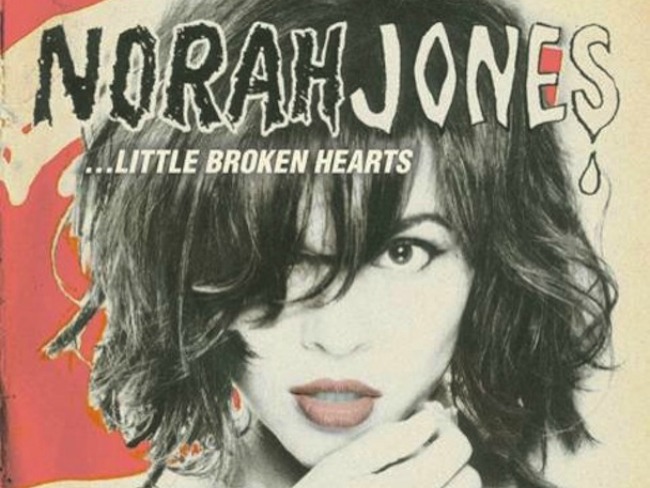
For, this weekend, after listening to her new Little Broken Hearts album, I have become a Norah Jones fan.

Norah Jones. Norah fucking Jones. The one who did Come Away With Me. An album which might as well have been sponsored by Chill FM, in association with the Dignitas Clinic. An album which I couldn’t get past the first 20 seconds of, so filled with horror was I of its sheer, ‘let’s snuggle up, take sedatives and abandon all thought-ness’.

When she first released her ‘music to have an organic picnic to’ album in the early part of this century, I was a big fan of the Libertines. And Biggie Smalls. If I listened to a female artist it was PJ Harvey. I had a lot of anger and a short attention span.

So maybe I didn’t give Norah the chance she deserved.

But fuck that. Her album was a sweetly smelling pile of shite. Pitiful bollocks which John Peel would have said something about with a casual wit of which I am not capable.

I hated Norah Jones, her music and everything she represented. (You may have inferred this already, but I like to underline a point.)

And the good thing is, after the abortion that was her first album, it seems that a lot of people hated Norah, too. It appears that her nearest and dearest have undergone a concerted campaign to be as nasty as possible to the pretty girl with the pretty voice.

Because her new album is so full of malevolence, hate, and cruelty that it makes you wonder if the thing has been penned by Nick Cave.

Exhibit A is the song Miriam. The choice lyric here is:

“Miriam, you know you done me wrong, I’m gonna smile when I take your life.”

She sings it sweetly enough, which makes the murderous threat all the more twisted. http://youtu.be/bnBnzP_nQ3g

On She’s 22, she sings, “She’s 22, and she’s loving you, and you’ll never know how it makes me blue. Does it make you happy?” A very simple lyric, but delivered with a bittersweet attitude which is not far from Billie Holiday. http://youtu.be/W6O1xQMv6o8

Norah Jones has gone from being background music of the worst sort, to music, if it were played at a dinner party, I’d tell people to shut up and listen (this is perhaps why I rarely get invited to dinner parties).

But maybe it is me. Maybe I have changed. I have been on the live performance scene for a couple of years now. I’ve witnessed performances which have made me cringe in horror (some, on reflection, by myself). I know what a revelation it is when you hear someone with talent, up close. If Norah Jones was in a small venue with an acoustic guitar, she would blow me away, saccharine lyrics or not.

I can now appreciate talent for what it is, rather than instantly seeking to denounce something which is not to my specific taste, however enjoyable that might be. I am, without doubt, more tolerant.

So, it seems, we’ve both changed. And from my new, slightly more mature standpoint I am happy to say Norah Jones’s new album is brilliant. However, just to balance things out, I also downloaded the new Killer Mike album, which hopefully will assuage my old self that I haven’t changed too much.

“Death is different.” Katie Price’s Sunday sermon

Britain's leading writer Katie Price

She is already the UK’s leading writer, with her novels, memoirs and style books a fixture on the bestseller lists.

But for a polymath such as Katie Price, whose only remaining literary rival is eighteenth century lexicographer Samuel Johnson, that was never going to be enough. Today, in the first-ever edition of the Sun on Sunday, she adds another string to an increasingly packed bow.

Yes, Katie Price has become a columnist. Combining razor-sharp political analysis with the common-sense wisdom of an ordinary mum, the column, entitled Katie Price, has it all.

The main piece is a hymn to family values, suggesting that it is bad parents who are to blame for Broken Britain, not bad schools. She outlines her theory thus:

“It doesn’t matter what school you go to – it’s family that really makes you who you are. I went to a state school – and look how well I’ve done. That’s because I had a sense of family.”

Anyone who saw Katie Price in her orange-skinned, multiple boob-jobbed heyday, slinging champagne down her neck whilst wearing little more than fake eyelashes and one of Alex Reid’s skirts couldn’t help but draw the conclusion that here was a woman who was achieving success through good, solid family values.

While Price’s longer works of penmanship are without doubt hard-hitting and thought-provoking, she has the ability to ‘get it said’ in remarkably concise fashion.

In a small piece on the left-hand column, just below an image of the correspondent in a demure below-the-knee blue dress, are words as wise as they are heartfelt. For it is here that she turns her felicitous pen to the tragic demise of pop star Whitney Houston, 48.

Katie is, like many of us, a huge Whitney fan. She had Houston’s music played at both her weddings, which shows a stubborn spirit which Churchill would admire.

Here I should let Katie take up the story:

“I felt so sad watching her funeral on TV because there should have been more dignity. I know I’ve lived a lot of my life in front of TV cameras – but death is different. Whitney’s funeral should have been a private affair, not a circus.”

It is Katie Price’s ability to get to the nub of the matter that separates her from lesser writers, such as William Hazlitt.

She rightly makes the not oft-made point that death, when compared with life, is different. There is simply no arguing with that kind of logic. It is inescapable, just like death itself.

Seven months after the demise of the News of the World left the millions people who read it every week without sustenance on a Sunday, it is heartening that Murdoch’s ready-made replacement contains such words of wisdom. While the Sun on Sunday inevitably lacks some of that vigour which only phone hacking can bring, with the advent of Katie’s (doric) column, one imagines that the readers will flock to News International’s newest newspaper in their droves.

Family values: Katie Price / Jordan

Is gangsta rap a force for good?

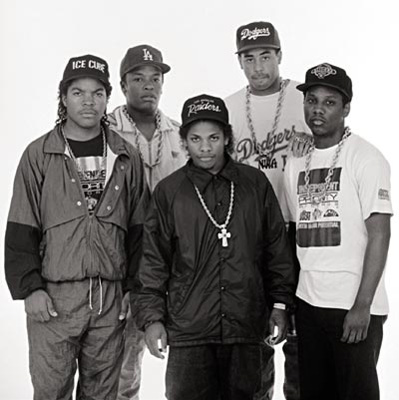
Uncompromising and groundbreaking: NWA

*****

What rhymes with bigger?
What rhymes with trigger?
What rhymes with figure, jigga, gravedigger and cigarette?
What rhymes with the friend of Winnie the Pooh who wasn’t Eeyore, Christopher Robin or Piglet?

It’s a versatile word, yes, but the world would definitely be better if every rapper was banned from using his favourite epithet
It goes without saying that its flippant use in pop songs has got to be wrong
To spray the word like dirty fertiliser upon the earth
To use the term to wrap raps around is absurd
When we heard that if this word was spoken by black men
Their contribution would always be token

Right?

Maybe,
But why did Ice Cube name his band NWA and not BMEMWA:
Black Minority Ethnic Men With Attitude?
Could it be that he had learnt that men like him
Had spent 400 years not even being seen
So when he got up on the mic
Forgoed platitudes about the American Dream
Instead got heard by lacing his verse with savage language
So a racist could hear everything he was afraid of
From unrestrained hate through to pussy lust and gun love

This wasn’t high art
But vexed brothers blazing a path
Giving a generation of wordsmiths the chance
To exercise their first amendment right to rhyme tight
On worthy subjects like hoes, blunts and Smith & Wessons
Until rap became more all-American than John Wayne westerns
And 20 years after Straight Outta Compton
And two decades of relentlessly negative self-portraits of black men
America had such a low opinion of this race of untermensch
That they rejected a white war hero, and elected a black President

Jay-Z: the lessons from history

How did Jay-Z rise to the top?

I have always been mildly perplexed by Jay-Z’s pre-eminence in the rap game. He is not the best rapper, nor the most inventive or best produced. His monotone delivery is tedious when compared with Ghostface or Eminem. His lyrical content tends to shift between the contents of his bank balance and reminiscences about his youthful work experience.

I remember being given a white label of his Hard Knock Life album. I was getting nicely into Big Pun at the time, a rapper of astonishing wit and verbal dexterity. In comparison, Jay-Z seemed tame, and despite a somewhat amusing title track featuring the orphan Annie, Hard Knock Life was seriously below the late-90s average.

However, a decade or more on, there Jay-Z still is, still making that ridiculous ‘cheah’ sound before beginning yet another limp boast, on another pop hit.

So, the time has surely come to ask: how did Jay-Z rise to the top? And, more important, how does he stay there? Here I search through the history books to find some parallels to explain the phenomenon that is Jigga.

Joseph Stalin (1878-1953)

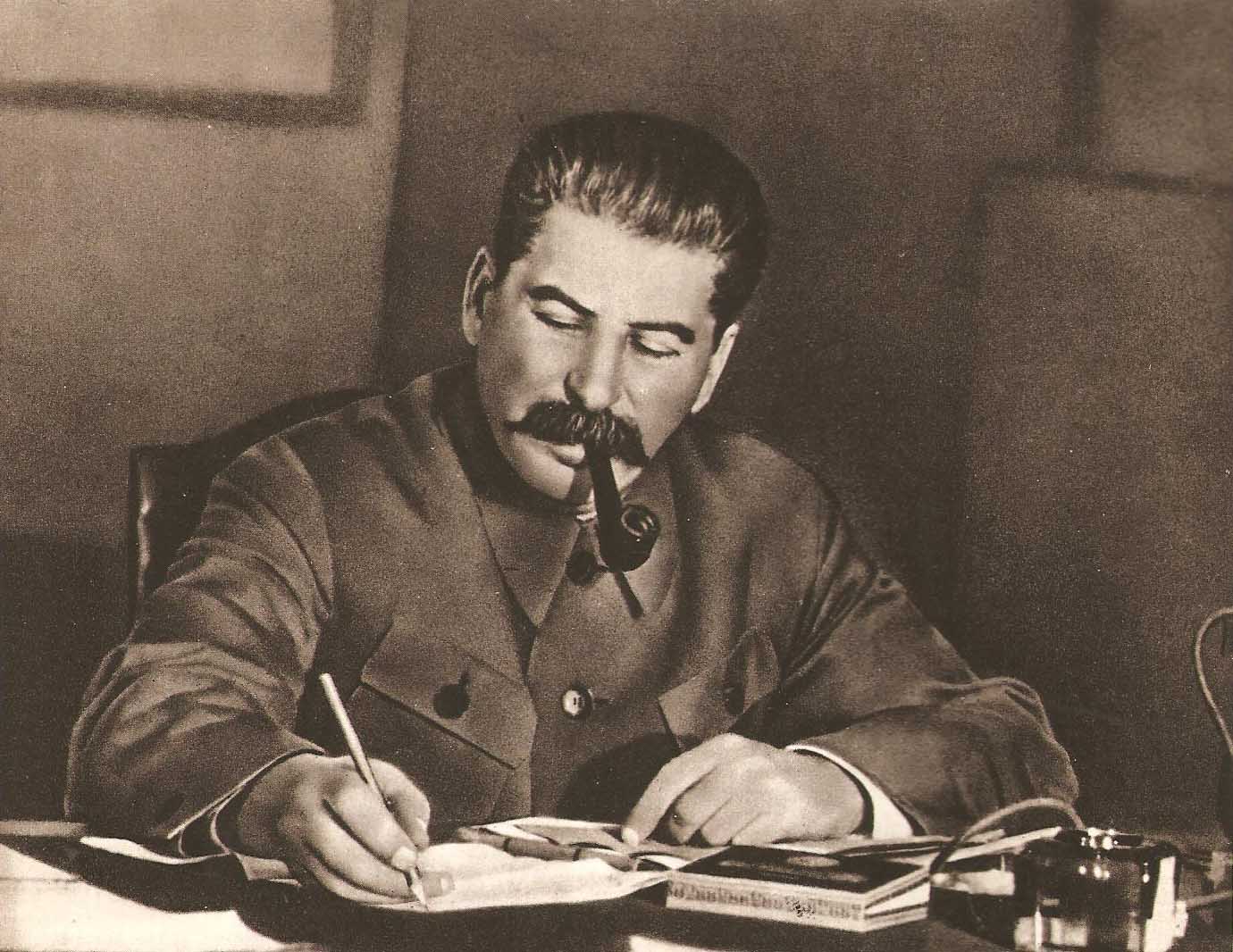
Casually ordering another execution: Joseph Stalin

Stalin rose to power in Russia after the death of the more brilliant Lenin. He then wiped out all of his enemies, including Zinoviev, Trotsky and a few million others. He cannily made great political capital of carrying on the flame of Lenin, much like Jay-Z does with Biggie.

Now, I would never suggest Jay-Z organised the deaths of the more talented Biggie, Tupac, Big L or Big Pun. But he certainly benefited from a lot of rappers dying just at the time he was starting out in rap. It was, I am sure, all just a terrible coincidence.

Lesson for Jay: Eliminate your enemies.

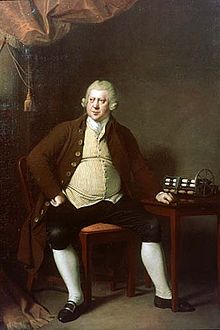
Duplicitous and money-grubbing: Richard Arkwright

Richard Arkwright (1732-1792)
Arkwright was as skullduggerous, money-hungry, thieving bastard as has existed in England, who Jay-Z would no doubt admire greatly. During the Industrial Revolution, he infamously nicked the idea for the spinning frame, patented it, got rich, consigning the actual inventor, Thomas Highs, to the margins of history. This is similar to Jay-Z’s appropriation of Ice-T’s 99 Problems, and nicking part of Nas’s The World is Yours on Dead Presidents, which began their little argument.
Lesson for Jay: Nick other people’s ideas.

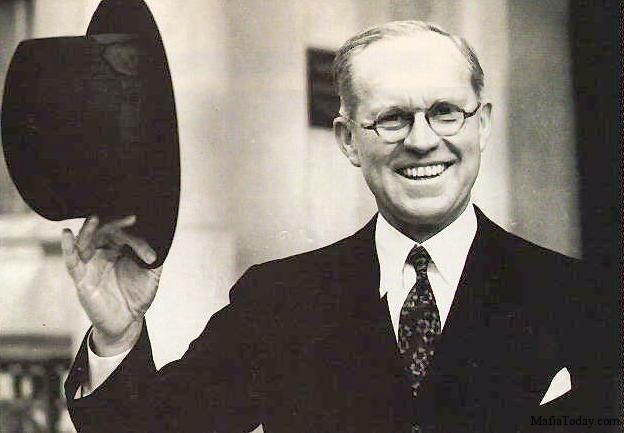
Joe Kennedy: The US ambassador was orignally a bootlegger

Joe Kennedy Snr. (1888-1969)
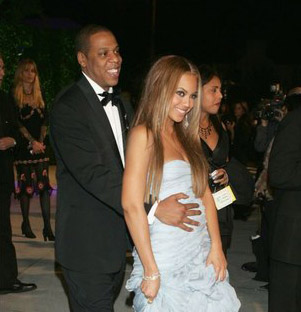
JFK’s dad made his fortune selling bootleg liquor during the Prohibition era, before going legit. This echoes Jay’s youthful business enterprises. Joe also married Rose Fitzgerald, a beautiful woman who was from a powerful political family in Boston. They went on to form the greatest political dynasty in US history, which bears a striking similarity to Jay’s highly strategic marriage to Beyonce. The happy couple have no doubt already plotted a great future for their offspring.
Lesson for Jay: Stack your riches, then go straight. Marry into power.

Beyonce and Jay-Z: in love with the Kennedy-esque idea of the career enhancing marriage

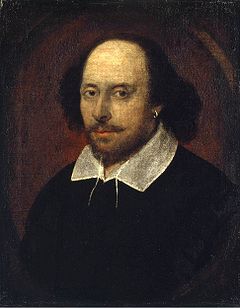
William Shakespeare (1564-1616)
The original Executive Producer. Did Shakespeare write all of Shakespeare’s plays? Of course not. Jay has learnt from the Shakespearean business model and is unconcerned about actually writing his own songs. As Ol’ Bill would no doubt tell Jigga, as long as most people think you wrote something, that’s all that matters. Legacy secured.
Lesson for Jay: Claim credit for everything.

Shakespeare: the original Executive Producer
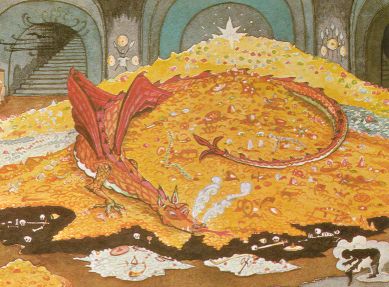
Smaug
A dragon who nicked everyone’s money then sat on it.
Lesson for Jay: Nick everyone’s money, then sit on it.
Smaug: a massive influence on Jay-Z

Scousers: the greatest people in the world, ever

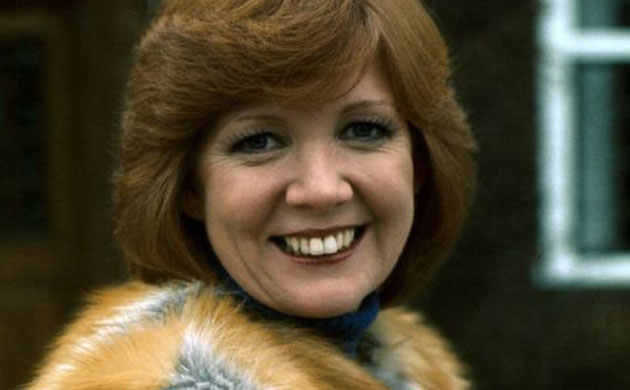
A lorra lorra talent: Liverpool's very own Cilla Black

I recently went on a day trip to Liverpool, in order to go to the Tate. Following directions from the station, I ended up at dockside, where I was welcomed by a biting wind, mist and a deepset drizzle.

I couldn’t see the Tate. In fact I couldn’t see much of anything, but did manage to pick out a large, modern building off in the distance. Thinking this a likely candidate, I set off towards it.

Up close, the building was impressive. A massive, modern stone and glass affair with cantilevered wings which looked very sci-fi, in a civic building kind of way. However, it wasn’t the Tate. It was the Museum of Liverpool.

The inside was even more remarkable. The entry hall was jawdropping, with a huge, circular staircase winding up to the top of the building.

I was initially disappointed with the displays. I thought them simplistic, telling sugar-coated stories of the city’s past which could only be enjoyed by backward eight-year-olds and geriatrics. But then, on reflection, I realised the Museum of Liverpool told a valuable truth: the museum presents a picture of how Liverpool would like itself to be viewed.

Sadly, not everyone will be able to visit the museum and gain these insights, so I have taken the trouble to provide you with a handy summary.

The Museum of Liverpool’s History of Liverpool
As recorded by Richard Purnell

Liverpool is the best place ever, and always has been. Its people, fondly known as Scousers, are unrivalled across land and sea for their wit, pluck, friendliness, and ability to say ‘like’ at the end of sentences in a way that sounds as if they are coughing up phlegm.

Everything that comes out of Liverpool is brilliant, and better than anything Manchester has done. Liverpool started music, with the discovery of the Merseybeat sound in the 1960s. Out of this came the three best bands in the world, ever: the Beatles, Gerry & the Pacemakers, and Cilla Black.

Football was invented in Liverpool, as a pastime for dockers relaxing after a hard day’s strike. Liverpool and Everton football clubs have always shared the league championship between themselves, with homegrown players such as Kenny Dalglish, Alan Hansen and John Barnes proving that Scousers are easily the best footballers.

However, with the advent of the Premier League in 1992, Liverpool and Everton magnanimously decided they would not compete for the title for 20 years. This was done in order to give other clubs the chance to catch up. It is expected they will resume their domination of the league soon.

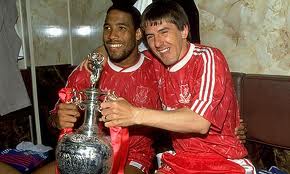
Homegrown talent: Barnes and Beardsley

Liverpool invented humour, famously known as Scouse wit. Scousers, needless to say, are the funniest people on earth – you just can’t put one over those plucky Liverpudlians! The funniest comedian ever is Ken Dodd, closely followed by Jimmy Tarbuck. This grand tradition has been carried on by John Bishop, with his oh-so canny observations on British life (and unnervingly large white teeth). Some people say that Tarby, Doddy and Bishopy are not funny. There is a name for those joyless people. They are called Mancunians.

Digested guide

Liverpool = good. Manchester = bad. London = who cares?

Ps: For an adult version of Liverpool’s history go to the Maritime Museum of Liverpool and International Museum of Slavery on Albert Dock. Both are fantastic.

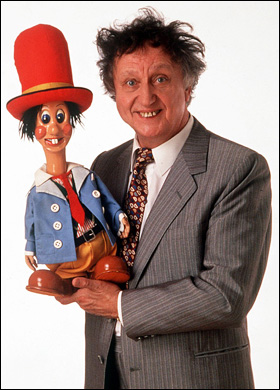
As funny as he is good looking: Ken Dodd

Why Movember epitomises everything wrong with our once-great nation

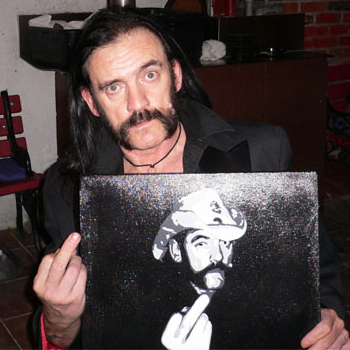
Here is Lemmy's considered opinion of Movember

This year, the strange and disturbing event called Movember has gone up a gear. Like winter flu, it appears to be becoming more prevalent.

Friends, colleagues and Twitterers have invited me to join in the Movember ‘fun’.

To each and every one my stance has been firm. Unwavering. I am not going to ‘do’ Movember. Not this year, not ever.

The whole idea is preposterous, and an insult to the noble tradition of moustache-growing in this country. In fact, I would go so far as to say that Movember strikes at the heart of everything that is wrong with this country – what the Sun rightly calls Broken Britain.

The problem stems from the fact that those ill-advised people who participate in Movember grow their moustaches for one month only. Thirty days. And then shave it off.

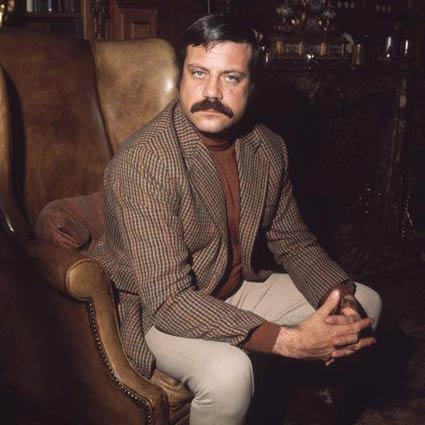
This is half-hearted. No decent moustache has ever been grown in thirty days. You would not find a Lemmy, a Merv Hughes or an Oliver Reed countenancing doing Movember. It is shilly-shallying. Unmanly.

Fortunately Oliver Reed did not live to witness the rise of Movember

I first became aware of Movember when I worked at the Science Museum a few years back. There was a cheerful fellow called Ben Jackson who was getting involved.

He proudly grew the thing, and towards the end of the month had something which was showing promise. Given time, Ben’s moustache had a good chance of becoming luxurious and sweeping.

But despite this sapling promise, he remained set upon shaving the thing off. I could not bear the thought of it. To shave now was akin to drowning a newborn kitten in the bathwater.

I spoke to Ben, man to man. He revealed that he did not want to shave off his moustache. He liked the look of it. It gave him something to stroke without putting his hands down his trousers. But his girlfriend was opposed and had told him that as soon as the month was done to get rid.

So moved was I by this tale of woe I transformed from a semi-comatose Outlook monkey to a Man of Action. That very day, the 29th of November, I asked everyone at work to donate to save Ben’s moustache. Many people were of a like mind and in the notoriously parsimonious corridors of the Science Museum donations of above £75 were received.

At the end of the day, in a small presentation in front of colleagues, I handed over the money.

Ben was overwhelmed. He said he would continue to grow the thing for another month at least. There were hugs, there were kisses. It was emotional.

However, his girlfriend remained an implacable foe – a sort of Skeletor to his He-Man. Every night she was on at him to shave it off.

Don’t rise to the bait, I counselled.

Another week went past and Ben’s upper lip took on new heights of magnificence. If Lord Kitchener had seen him at that point he would have made him an officer on the spot.

A few days later I saw him in the staff kitchen, looking ashen. ‘She says it’s got to go by Christmas,’ he said.
‘She can’t mean that.’
‘She does,’ he quavered. ‘She does mean it. If I don’t have the thing off by Christmas…well.’
‘It is the moustache or her?’
He nodded.
‘Well, Ben,’ I said, realising we had reached the endgame. ‘Only you can decide.’

The next day I went into Ben’s office. It was a painful sight. Where once had been a magnificent hunter-gatherer type now sat a pale, pitiful wretch.  The moustache had gone and with it his manly self-esteem.

This sad tale reveals what Movember can do to a man. It shows that we live in an age when the ironic pose is prized more than sustained commitment.

Movember is emblematic of how far we have fallen as a nation since the great days of Empire. If we are ever to recover our battered national pride and recapture the glory days of the past, Movember must go.

"Grow a moustache in thirty days? Whoever said such a thing deserves to be shot!"