What do Ledley King, Toni Morrison and Levi Roots have in common?

Martin Luther King would be happy to be displayed alongside his namesake Ledley
Martin Luther King and Ledley King: historic equals

There is a moment, familiar to all who attend poetry open mic nights, when a poet who is of black ethnicity says, “I wrote this poem for Black History Month.”

When you hear this, three things are almost certain:

1. This will not be their best poem
2. Martin Luther King will more than likely get dragged into it
3. Malcolm X and Marcus Garvey, mostly for alliterative reasons, will not be far behind.

I am not sure why this should be the case. In fact, until very recently, I didn’t even believe Black History Month was real. I had hitherto understood that what was formerly known as October was not Black History Month at all, but Breast Cancer Awareness Month. In my breast cancer campaigning days I was somewhat scornful that black historians weren’t aware of this basic factual error.

Now I am outside of the breast cancer charity arena, and more just floating around south London, it is clear that most people, particularly in the public sector in Lambeth and Southwark, are in no doubt: October is Black History Month.

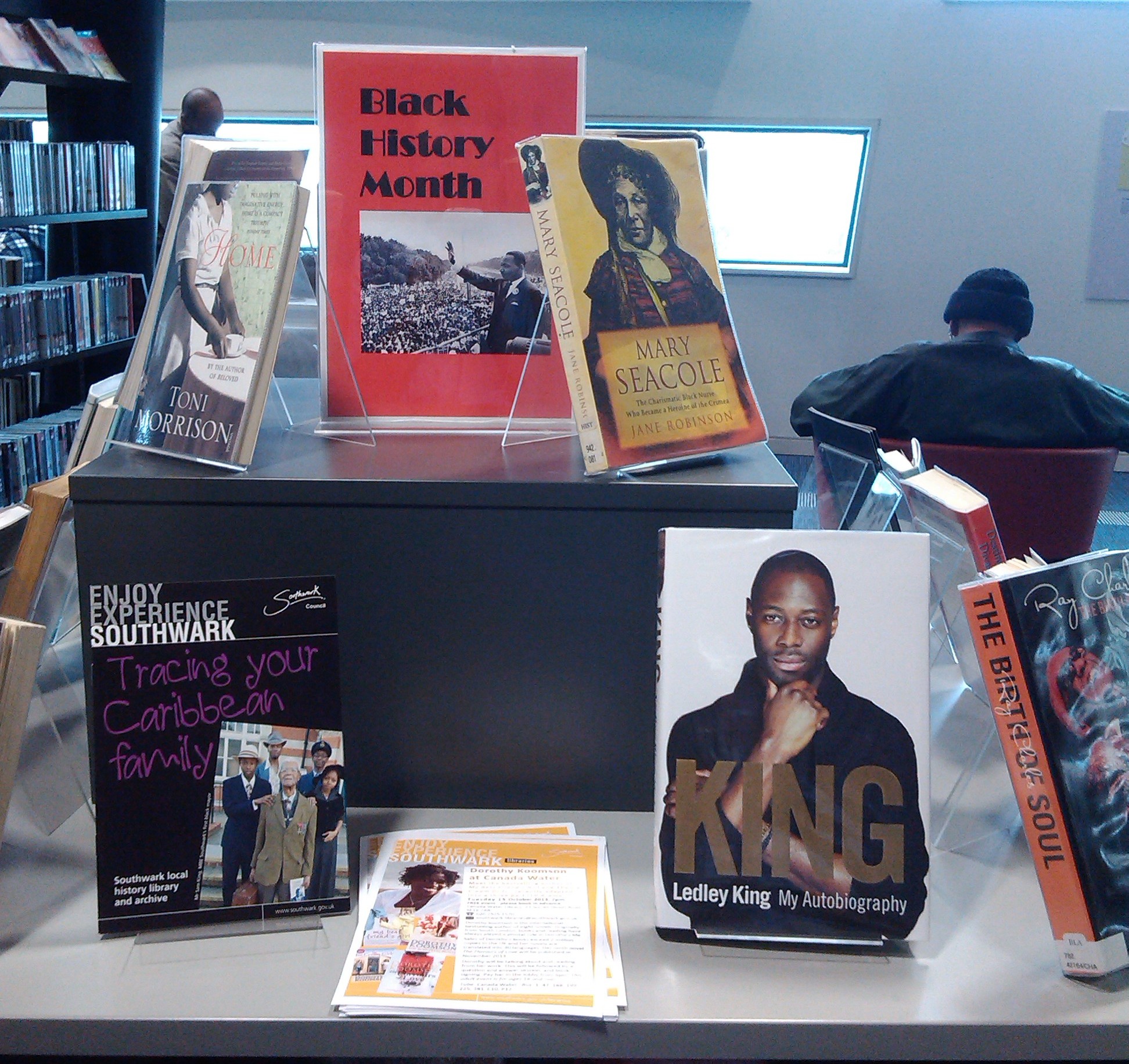
A recent trip to Peckham Library manifestly demonstrated the point. There was nothing about breast cancer, but an entire display area devoted to Black History Month. As you would expect, they had works by great writers who are of black ethnicity, such as Toni Morrison and Chinua Achebe, and a biography of Mary Seacole, a courageous nurse from the Crimean War.

Also on display was an autobiography by former Tottenham Hotspur defender Ledley King, and cookbooks by reggae cooking star Levi Roots. Initially, I thought that Ledley and Levi were out of place in this company. Indeed, I presumed that the inclusion of these two trivialised the idea of a month celebrating black history.

How wrong I was.

Ledley King’s autobiography revealed that, just like his namesake, he also had a dream. Ledley dreamed of becoming a professional footballer. When I had finished reading the book I couldn’t help but think that Ledley was probably more successful than Martin Luther King, because he achieved his dream whilst still a teenager.

Again, reading Levi Roots’ literary output transformed my view of him, and his place within black history. Little did I know that the history of spicy sauces was every bit as riddled with racial injustice as slavery. It was only with the production of the Reggae Reggae sauce that black people finally emerged from the oppression of spicy sauce companies such as Tabasco and Lea & Perrins.

Historic: Levi Roots coming out from under the yoke of Lea & Perrins
Historic: Levi Roots freeing the spicy sauce market from oppression

The Peckham Library display left me in no doubt that it is much better for Toni Morrison to be grouped alongside Premier League footballers of black ethnicity rather than other Nobel Prize-winning authors from different racial backgrounds.

While artists such as Kendrick Lamar are demanding that this era be known as post-racial, Black History Month allows us the anachronistic comfort of judging people first by the colour of their skin and then, a little later, by the quality of their character and achievements. Which is, I’m sure, what Martin Luther King, 50 years on from his oft-poetically butchered speech, would have wanted.

The poet wakes up and roams and comes home and writes this

The only thing you can aspire to growing up in Essex is to be the barrowboy or banker, trading, raking it in, fingerless gloves in Romford market, salmon shirts in the City, it doesn’t matter, you’ve got to be trading, raking it in, making a living, earning your keep, working and working and working away.

But what are you supposed to do if you are a dosser at heart, curtains drawn at seven a.m., George Osborne tutting on the street below, and all you are good at is words, constructing words into insubstantial sandcastles, how do you, as a poet, make a man of yourself?

You’ve got to sell your wares:

Six and ha’penny worth of sonnets, Mrs Springtime?
Do you want some limericks with that?
Will that be open or wrapped?

They say, I’m not sure who they are, but they definitely do say that the poet should not compromise his vision, and I believe that to be true but not true in my case because my vision is already compromised, it is necessarily compromised by my need to fulfil my erstwhile Essex desires. So when TFL came to me and said, Richard, we want you to do positive poems about TFL and etiquette

(Me who listens to dirty, dirty hip hop on tube trains, it’s seediness leaking into the ears of poor uncorrupted children who might otherwise be listening to pure pop sung by cynical teens with perfect hair and an eye on the till)

I said, yeah, alright.

So, I went down to Croydon, well turned out in my blue suit, and I sidled up to the old ladies – they love me, old ladies, and I love them – and delivered my lines about all the evils that other people do and the old ladies nod, and they say, you are quite right, Richard

and it proves that if you rhyme nicely and throw a few puns in along the way, people will believe what you say

and the young people who would like to think they are immune, they are also susceptible, because poetry makes people realise

it makes them realise that life is all right. You can moan and caterwaul all you like, but in our much criticised social democracy where nothing is good enough, if Transport for London have enough courage to pay a few poets some money, some honest cash money, to roam over London spreading goodness, and allow the poet, for a week only, to pretend he is a real life worker, with dignity and all the rest, then it would be churlish to argue too stridently and unrelentingly about our imperfect state of affairs.

Living life to the full: a poem

Yesterday, I was walking through the car park
on my way to Morrisons when I said to myself
“I think I’d rather go bowling instead. I’ll go bowling
and eat fries out of one of those little paper bags,
and Coke from a Coke bottle, drinking it
without the bottle touching my lips,
like in the adverts.”

I go bowling and play a two-player game against myself.
It’s an interesting battle. Player one has a lovely technique,
spinning his medium-weight ball into the pack of pins
accurately but without great force.

Player two is the fans’ favourite. A showman.
They love the way he looks up and says a not-quite-silent prayer
before heaving the ball down the lane, brutishly,
fist-pumping in his opponent’s direction.

Afterwards, I go to the Counting House for a pint
and read a story in the Mercury
about a Mr Jez Wilkinson of Kibworth Harcourt
and his prize-winning courgette.

Later, I indulge in some light graffiti,
drawing a magic mushroom smoking a spliff
on the rear wall of the pub, before
making my way to Morrisons.

I’m doing fine living on my own.
How are you?

Remembering Bernie Nolan

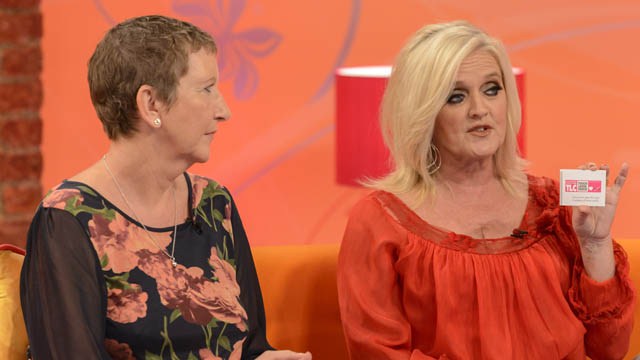
Promoting Breakthrough Breast Cancer ... Bernie Nolan in action
Promoting Breakthrough Breast Cancer … Bernie Nolan in action

Working in the PR team for Breakthrough Breast Cancer at many times gave me cause to ask myself: “What is happening to my life?”

Or more specifically:

“Why am I surrounded by women who are eating cake at 10 o’clock on a Monday morning?”
“Why am I able to hold a relatively competent conversation about the contents of Heat magazine?”
“Why am I escorting ex-wag Lizzie Cundy to a champagne reception?”

None of these questions has a clear answer. The only answer that stuck was that Breakthrough Breast Cancer is a woman’s world. They do things differently there.

Bernie Nolan, the singer in the Nolan Sisters who has died of breast cancer aged 52, was a big part of that world. After she was diagnosed with the disease in 2010 she became a powerful advocate for the cause.

Needless to say, I was the only person in the team who didn’t know who she was. When I found out, I was mystified as to why she could be considered a celebrity. When I hear the Nolan Sisters’ biggest hit, “I’m in the Mood for Dancing” my usual reaction is, “Well… I was.”

But then, over the course of Breast Cancer Awareness Month through October 2010 I saw her impact. How she went on Daybreak to hammer home the message about the need for women to be breast aware. Her audacity in plugging the work of our charity live on TV, even to the highly ‘proactive’ Breakthrough PR team, was a revelation. She knew what the rules of live TV were, and blithely ignored them. Because she was a Nolan. Or something.

Then, in 2011, she told ITV that she would be visiting the Breakthrough Research Centre on the Fulham Road, and they would film her. As research was my beat, it was my duty to accompany her. I was somewhat apprehensive, wondering what small talk we would have in the inevitable lag periods between filming.

I needn’t have worried. When I greeted her at the research centre she immediately put me at ease and showed a lack of ego and charm rarely present in famous people.

However, there were still troubles ahead. She was due to interview Professor Jorge Reis-Filho, a frighteningly intelligent pathologist with a love for media-friendly phrases such as ‘molecular subtypes’, ‘tumour stratification’, and many more. I, not unreasonably, thought that the contrasting worlds of daytime telly and a pathologist’s laboratory might be insurmountable.

They went in for their filmed conversation and I waited outside. And waited. And waited. They must have been talking for the better part of an hour when Bernie finally emerged from the lab. Not wanting to sound anxious, I asked her if the interview had gone well.

Bernie said: “I didn’t understand everything he said.” Which was understandable, considering there are leading cancer researchers who can’t keep up with Jorge. “But he told me things my doctor wouldn’t tell me. He told me the truth.”

I didn’t know exactly what she meant by that, and wasn’t going to pry. But I did know that Jorge, for all of his geeky verbosity, had a complete inability not to speak his mind. As did Bernie. And so, while they were talking two different languages they connected as one honest person speaking to another. He the scientist; she the patient. Gossiping over the garden fence, about cancer.

She then interviewed a woman living with secondary breast cancer, the incurable version of the disease. As a person who prefers to live only within a world of cynicism and irony, I found Bernie’s empathy during that interview to be mind-blowing.

Throughout the day, I found out a lot about Bernie. How she liked a drink. How proud she was of her daughter (very proud, if you were wondering). How she would do anything, use every ounce of her celebrity, to help our charity. It was that openness, that warmth, that irrepressible energy, which made her so likeable.

The truth is, Bernie wasn’t the most extraordinary person I have ever met. I have met many women who had great personalities, and the same determination to raise money and awareness for Breakthrough Breast Cancer as Bernie did. However, she was the only one who could ring up Lorraine Kelly and invite herself on her show. She knew that those other women would do that if they could. So she did.

When I meet up with my former colleagues tomorrow evening, I’ll be back in Breakthrough mode. Chatting about cake, Heat magazine, and Bernie. And quite possibly I will be in the mood for dancing. To Prince, Funkadelic, Nelly, Madonna, Michael Jackson… and, if I’m up to the eyeballs with tequila, even the Nolan Sisters.

Peace to Bernie.

Laura Robson: a statement to the British people :(

Happy: Laura Robson after being told Rishi Persad was waiting to interview her.

In the aftermath of her defeat at Wimbledon, Laura Robson dictated the following message to her legal team, to be issued immediately to the media:

STATEMENT FROM LAURA ROBSON

1. My defeat was, more than anything else, the result of not enough people shouting out, “Come on, Laura!” during the match. I will only achieve success at Wimbledon if people, ideally from a public school background who know nothing about sport, shout out, “Come on, Laura” before I am about to serve. It gives me a real boost 🙂

2. I need more fans to wear Union Jacks. This could be in suits, hats, t-shirts or face paint, but I need to see those Union Jacks, guys. It makes me feel proud to be British, and also clearly shows to my opponent that they come from an inferior nation.

3. During my match I was hurt and saddened that Cliff Richard was watching SERENA WILLIAMS 😦 Sir Cliff, I admire your songwriting, particularly Mistletoe & Wine, but if you can’t watch my matches at Wimbledon I don’t have a chance. Not one hope. Please Cliff, help a sister out 🙂

4. The BBC, particularly Sue Barker and Rishi Persad, must help me. I need you to much more constantly talk about my age, and how young I am, and how amazing it is that I can even serve a tennis ball at all, considering how I’m just out of infants’ school. Rishi, if you do not start every question to me with reference to my extremely young age, and how it all must be terrifically exciting for me, to be out playing tennis without a chaperone, I will not have a chance in my tennis career 😦

NB: Ideally, I would like to be offered a Chupa Chup lolly when I am being interviewed, but if you don’t have a Chupa Chup, any boiled sweet will do 😉

5. The rest of the media has begun to understand that because I am a white, middle-class girl who can sometimes beat foreign girls at tennis I am a NATIONAL TREASURE. Yes, I am 🙂 Please, guys, I need more of this. I need to know that I am at least as popular as Stephen Fry. If newspaper articles don’t always always say I’m a National Treasure, I will take up bulimia and tattoos and write a book about it.

6. This is really serious. If the above points are not strictly stuck to I will never have a chance in my career – there is no way I will make it by hard work and talent alone. But I’m sure they will be because we are a great nation and good at pulling together, like we did after the Amritsar Massacre.

7. Thanks for listening, guys! Remember, I can’t do it without your support!

See you next year, Laura Robson xxx 🙂

STATEMENT ENDS

Back in the saddle: Frank Skinner live (review)

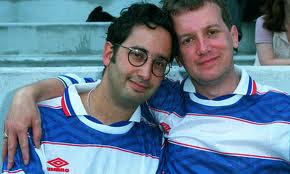
The photographer has left a space for David Baddiel to be photoshopped in.

I like Frank Skinner.

I like him because he reminds me of the 90s, that more innocent time when Tony Blair was popular, the use of combat trousers were being revolutionised by the All Saints and curtains were considered to be a perfectly acceptable haircut. (I should know, I had a lovely pair myself.)

Skinner’s contribution to that Age of Innocence was co-writing, with David Baddiel and the Lightning Seeds, the song Three Lions in which they propagated the fictional idea that England could win at football. No less significantly, he pioneered an entirely new art form: that of Witty Banter, whereby men in their 20s and 30 sit and talk (either behind desks or on a sofa) in an unscripted, hilarious way about things they know nothing about.

Considering the above, Frank Skinner’s cultural significance in a fin de siecle context is absolutely secure.

Frank Skinner giving David Baddiel a hug for having the decency to shave his goatee off

But, trouble is, he’s still alive and kicking in 2013, at the age of 55. The TV work has dried up, and he’s got a baby at home, which means he needs to get out of the house more often. Hence, this return to stand-up at the Soho Theatre ahead of a full UK tour later in the year.

Right from the off it it was clear that the dichotomy of being rich, famous and comfortable, while having a stand-up act which relies heavily on him being an ordinary, honest bloke from the West Midlands, was weighing heavily upon him.

In the first fumbling minutes of the show, he confessed to all of this in a manner as awkward and nervous as a teenager on a first date (it’s no surprise that the only person he built a bit of rapport with was a 16-year-old who had come along with his mum because he liked Three Lions).

Some of his ‘topical’ jokes were as bad as anything I have ever heard, and poorly delivered as well. One about racehorses involved in the horsemeat scandal – “One minute they were under starter’s orders, the next they were being ordered as a starter” – was terrible, and made worse by him effectively giving the punchline away in the build-up. A bit rusty, shall we say.

The gig picked up in the second half when he started to swear a bit and talk about oral sex. He also raised an important moral question: If Shakin’ Stevens developed Parkinson’s would it still be okay to call him Shakin’? As a leading moral poet – known formally as a moraletrist – I was delighted that he consulted me on this matter.

My answer was clear: Yes. Because it is factually accurate.

I wanted to explore the matter in more detail, and share with him some moral questions I have successfully wrestled with over the years (such as: is it right to call a spade a spade if that spade is indeed a spade?), but he needed to get on sprinkling comedy gold about.

It is true that this show didn’t really have a beginning, or an end, or much of a middle. But Skinner shouldn’t worry, because I have developed a three-step plan to help him out.

1. Forget the topical material. You’re out of touch, Frank, and you know it.
2. Talk about the olden days: the 90s, the Spice Girls and their opposite numbers, the Spice Boys. Those days were good and people, particularly young people who were in push-chairs at the time, should be constantly reminded about them. Three Lions was a great song, despite what it sounds like.
3. Be realistic. You won’t win any comedy prizes with this show but, with a well-organised defence and a touch of luck, you might get a quarter-final spot. Which, as Sven Goran-Eriksson taught us, is still a very good result, given the available raw materials.

Is higher education a waste of time?

Suli Breaks
Suli Breaks

It is rare that a spoken word video is viewed by 10,000 people; rarer still when viewed by 100,000.

It is therefore surprising to find a video on the subject of higher education that has amassed two million views in four months – a viral sensation that many pop stars would be happy with.

The video http://youtu.be/y_ZmM7zPLyI  called Why I Hate School but Love Education, by Suli Breaks, makes the provocative suggestion that much of what goes on in university education is a waste of time, and more valuable learning might be gained informally.

Those of us who have been to university know there is some truth in this. There can barely be an undergraduate who has not sat in a lecture theatre wondering: why am I here? Or, perhaps: what have I done to deserve this?

It is also true that many people leave university with the rather depressing attitude that they are done with education, as if the learning part of their life is over.

So, I am sympathetic with the overall line of argument. But the way in which Suli delivers his message is so skewed and misleading, that instead of agreeing with him I found myself alarmed.

He begins by reminding us that society suggests higher education might well be a good thing, and that your family may agree with that sentiment.

He then asks us to look at the statistics. Here the trouble starts. Instead of quoting statistics, he provides examples of the net wealth of seven entrepreneurs, including Oprah Winfrey, Mark Zuckerberg, Steve Jobs and Richard Branson.

The connection is that these people did not complete higher education. The point being that they didn’t bother wasting their time with such trivialities as gaining a degree, and got on with becoming hugely successful, and fabulously wealthy, instead.

At least one of these people would be deeply offended with their life story being misused in this way. Oprah Winfrey initially left college just one credit short, because she had secured a job. As a woman who grew up in extreme poverty that was understandable, and the fact that she later graduated shows the value she placed on her own higher education. That she has since built an academy for underprivileged girls in South Africa underlines her belief in the power of higher education.

Another of his statistics, Mark Zuckerberg, was at Harvard when he came up with the idea for Facebook. He trialed his business model there, using his fellow students as guinea pigs. It is unlikely that Facebook would exist in the way that it does if Zuckerberg had not gone to an elite university.

However, the deeper problem here is that these people are outliers, who bear little or no relation to what most people gain from going to university.

Then came the part which I found not just wrong, but odious. Suli says:

Some of you will protest,
money is only the medium by which one measures worldly success
and some of you will even have the nerve to say:
I don’t do it for the money.
So what are you studying for?
To work for a charity?

This I found offensive because he suggests university is only about earning lots of money. About the destination, not the journey. Should a person, when beginning an English Literature degree, really be thinking about the job at the end, not the deeper understanding of the works of Chaucer and Shakespeare? This ‘money over love’ argument is deeply distasteful to myself, and also, I suspect, to the majority of our fellow spoken word artists.

His talking derisively about working for a charity reveals a lack of awareness of what that type of work can mean. For myself, over the past four years, it has meant working for a charity that I care about, and doing a job that gave me personal satisfaction way beyond the pay packet.

All that I have outlined would be clear to most people who watch the video. So, why, you might ask, has it gained so many views?

It is because he provides a seductive message that higher education is not the key to success. That it is boring. That it encourages limited thinking. That it won’t get you that dream job.

This can be partially true. At a time when university education is relatively expensive in the UK (although not compared with the US) and graduate jobs are hard to find, some young people might like a video which encourages them to at least question it, or, judging by the comments on YouTube, dismiss it. What he makes no mention of are the positive benefits of university: the opportunity to study a subject you might be fascinated by, to develop your critical thinking, while also meeting people from different backgrounds and having the time to develop your extracurricular interests.

It is potentially inspiring to say that lacking a university education is no barrier to greatness.

The more prosaic truth is that you are more likely to get a satisfying, well paid job with a degree than without one. That is the argument the UK government gave when introducing tuition fees.

Social mobility in the UK is very low in comparison to other rich countries http://gu.com/p/37mev/tw. There are many reasons for this. One of them is that for middle-class children going to university is a fact of life. For many working-class children university remains an unlikely dream, or perhaps not even that.

I can understand why Suli Breaks became disillusioned at university. He may have chosen the wrong degree for him and was not inspired by it. He may have had an idealistic view of university life which was not fulfilled. He may have found that the people around him were no more intelligent than those from home. But if he were, in 10 years’ time, compare which people were doing better – those who went to university and those who did not – he might produce a video which encourages people from BME and working-class backgrounds to take the life-changing opportunity that is university education. It wouldn’t be such an easy message to get across, but it would be a lot more useful.

The poet Tshaka Campbell and a joke about integrity

Tshaka Campbell
Tshaka Campbell

“I’m big into integrity,” said the poet Tshaka Campbell. “I’m not going to write about something like an abortion from a woman’s perspective because there is no way I could know what that is like.

“I don’t like poets who write a break-up poem and you say, ‘have you ever broken up with someone?’ and they say, ‘no!'”

Tshaka shrugged, and smiled, as if to say, “how ridiculous is that – to even think to do something like that?” And many of the crowd at Bang Said The Gun, a popular spoken word night in south London, laughed with him.

I didn’t laugh. I didn’t laugh because I was too busy wondering exactly how dangerous a joke like that is. He was effectively saying, in a flippant, light-hearted way, that if you haven’t directly experienced it, don’t write about it.

Which set me thinking: would he have told Hubert Selby Jnr to not write the rape scene in Last Exit to Brooklyn because he was not rape victim nor rapist? Would he have told Patricia Highsmith not to write The Talented Mr Ripley because she had no direct experience of murder? Would he have stopped Shakespeare from writing anything but the occasional poem about his early years in Stratford-upon-Avon?

I suspect not, because he would see that these were serious writers and would do what he could to encourage them. So I do not believe that he meant this joke to be taken as a general truth.

However, even if we look at the specific example he sets – that of the poet writing a break-up poem without having experienced a break-up – we can see that even this is wrong. For example, we know that Morrissey was famously celibate and had no boyfriends or girlfriends during his songwriting heyday in the 1980s.

That didn’t stop him writing one of the greatest love songs of all time, There is a Light That Never Goes Out. He was able to write this song, not because of a love that he had directly experienced, but because of his unique sensitivity to the human condition.

To give Tshaka the benefit of the doubt, he might have meant that if a writer writes about a difficult subject – a break-up; an abortion – and does not fully think through the subject, then poor quality writing is almost certainly the result. But that could equally be the case whether someone has experienced something or not – anyone who has been to a few open mic nights knows that.

Tshaka Campbell has been writing poetry for 20 years. The crowd was full of people there to see him, the headline act. Many were no doubt writers or aspiring writers, likely to be influenced by this charismatic performer and therefore take his ill-judged joke seriously.

I would be really sad if an aspiring writer came away from that night and decided to steer clear from daring, imaginative work, and write only from their own experience, because they believed it more artistically credible to do so.

The present glut of poets, and Campbell is not one of them, who seem to only write in the first person, suggests that the ‘only write from your own experience’ philosophy has its adherents. What I would like to see is more poets bravely experimenting with different styles and techniques – developing characters, writing from unusual perspectives, using satire and irony – before hitting upon a style which suits them.

As the songwriter Conor O’Brien, from the band Villagers, said in a recent interview:

“It was Dylan who made me realise that you could just lose your mind a little bit, and sometimes when you’re adventurous and you have that spirit in you something quite fundamental comes out.”

Which seems like a much better piece of advice for a writer than telling them what is off limits.

So perhaps Tshaka Campbell should impose a small limitation upon himself: stick to performing his often brilliant poetry, and leave the jokes to the comedians.

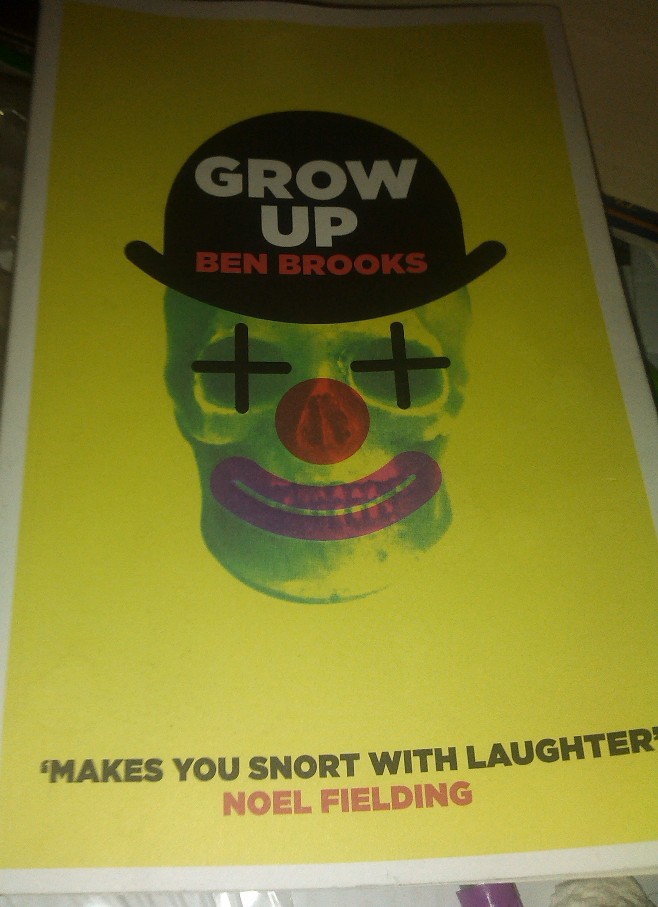
Ben Brooks is a great new writer and everyone should read his book, Grow Up

The HMV dog is listening to St James' Infirmary by Louis Armstrong. The HMV dog is trying to be ironic, in the hope that it will make death easier. The HMV dog is deluded.
The HMV dog is listening to St James’ Infirmary by Louis Armstrong. The HMV dog is trying to be ironic, in the hope that it will make death easier. The HMV dog is deluded.

I was shopping in HMV in Hastings on Thursday looking for some pre-death bargains. Trouble was, even with the last rites having been read, the bargains were still not that good. It was only 25% off some stickered items, which shows they are continuing their unrealistic pricing policy to the very last. But I wanted to buy something, for the souvenir carrier bag if nothing else, so I picked up two books for a tenner.

I’m glad I did so because my last purchase from HMV might well be one of my best. In fact, I’d be prepared to say that this purchase was second only to buying the GZA’s Liquid Swords back in the 90s. Because one of those two books was Grow Up by Ben Brooks.

I was attracted by the pleasingly mordant front cover, and the quote on the inside sleeve from comedian / poet Tim Key who says Grow Up is “sickeningly good. So confident, so stylish. An unacceptably witty and confident debut.”

That was good enough for me. And if that’s not good enough to persuade you to pick up this book as soon as possible, I hope the rest of this blog will be. Because for the rest of this blog I will mostly quote little bits of the book and tell you to read Grow Up by Ben Brooks.

Grow Up, would you believe, is about growing up. There isn’t what you’d call a plot, just a series of incidents involving the main character and narrator, Jasper Wolf, who is a teenager who likes taking drugs and having sex and does not like revising for exams. He also does not like his step-dad, who he thinks did a few murders and is going to kill his mum.

Here follows some quotations from the book. You will notice Ben Brooks is really good at writing.

The comedown from mephedrone is my least favourite type of skiing.

Jasper on his counsellor: Sugar is pouring out of her lips. Sugar is only good when it is in tea. It is not good when it is coming out of the mouths of overpaid women in suits who think that they are emotionally shampooing me.

The shipping forecast is an extremely comfortable duvet.

Jonah’s mum has watched the news every day since her husband died in Afghanistan. She is just looking for someone to swear at. She swears indiscriminately. I have witnessed it often. She swears at Trevor McDonald, Hannah Montana and Gok Wan. She calls them all cunts.

The first Harry Potter film is playing on the television. A flock of bright boats are shifting over black water. I have seen this film more times than I have had sex. That is a statistic I need to reverse. I will begin by not watching it again.

Read Grow Up by Ben Brooks. It’s on Canongate Press. You can probably get it in a dying HMV branch, or if you care little for the fate of the High Street you can get it on Amazon. I’m ambivalent about where you source your copy. The main thing is you read it.

Noel Fielding thinks this book is great, as does Tim Key. But it's totally up to you if you want to waste your life reading something that isn't as good instead.
Noel Fielding thinks this book is great, as does Tim Key. But it’s totally up to you if you want to waste your life reading something that isn’t as good instead.