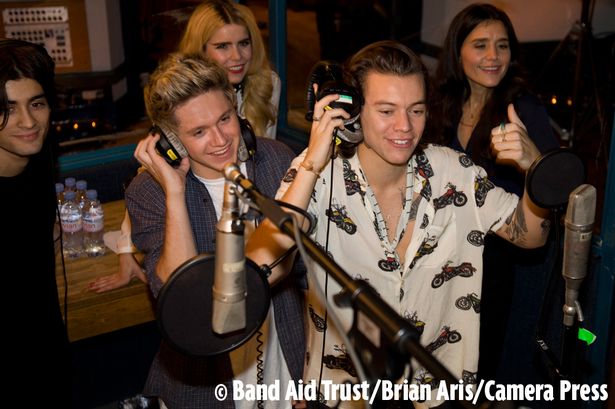
Do They Know It’s Christmas? #BandAid30 Official Artist Q&A

Spreading joy. Band Aid 30

Who are “they”?
Africans.

What is Africa?
A place where bad things happen.

Do they know it’s Christmas time, at all?
No.

Why not?
It’s not Christmas. It’s mid-November.

Yeah, but if it was Christmas, would they know it was Christmas?
Probably. This song gets wheeled out every few years, which has made a big difference. And, in any case, Christ is pretty popular in Africa. Particularly the countries the British invented/named/colonised.

Which ones are those?
Most of them.

So, if it was Christmas, who wouldn’t know it was Christmas?
The Muslims, probably. They don’t celebrate Christmas.

What do they celebrate?
That’s for them to know and us to find out.

Could we drop leaflets from drones over the Muslims on December the 25th to let them know that it is Christmas?
No.

Why not?
Because letting them know it’s Christmas, at all, is not the point. We are trying to stop Ebola.

What’s Ebola?
Bad.

How bad?
Very bad.

Have they all got it over there?
Not really. In fact, Nigeria contained the virus quickly and easily on their own, without any assistance from white people. But we don’t talk about that because it doesn’t help the “White Man as Saviour” narrative.

Right. So who are we helping again?
Bob.

Dylan?
That’s just the problem. It’s Bob Geldof. And if he doesn’t get on the telly a lot every five to ten years to remake this song, he wouldn’t have a purpose in life. You could say you are making a grumpy old man a bit less grumpy.

What’s in it for me?
You get to do something good for a change. And you get a lot of publicity. It aids your career, basically.

Do I get to meet any real-life Africans?
No! Oh, actually I mean yes. We have got a token African artist for you to meet. Bob Geldof doesn’t like African music or culture, but some fusspots reckon it is important that African musicians should get the chance to meet Chris Martin – to show that we have problems over here as well.

This sounds like a load of bollocks, yet something I can’t really get out of. How much of my time will it take?
About three hours. And your conscience will be salved for the rest of your life.

What does salved mean?
Just get in the recording booth, do your thing and make Bob Geldof happy.

Don't look directly into his eyes - Bob Geldof
Don’t look directly into his eyes – Bob Geldof

Who is Bob Geldof again?
He’s like a sweary Irish Medusa. And before you ask, sweary is when you say bad things to people, Irish is a term used to refer to the people of Ireland, who are similar to the English except they have more boybands and sanctimonious middle-aged rock stars, and Medusa is a less attention-seeking version of Bob Geldof, with better hair.

I’m scared now.
Don’t be. Ellie Goulding is in there. Just hold her hand and everything will be okay. Probably.

* * * * * * * * * * * * *

Note to reader. Two tips for doing something, whilst avoiding Geldof’s circus. Donate to Medecins Sans Frontieres and listen to some cool African music. Some of my favourites are Konono No.1 and also The Ethiopiques albums. Probably you have your favourites too, so feel free to let me know the stuff you like to listen to, when you aren’t listening to the Boomtown Rats.
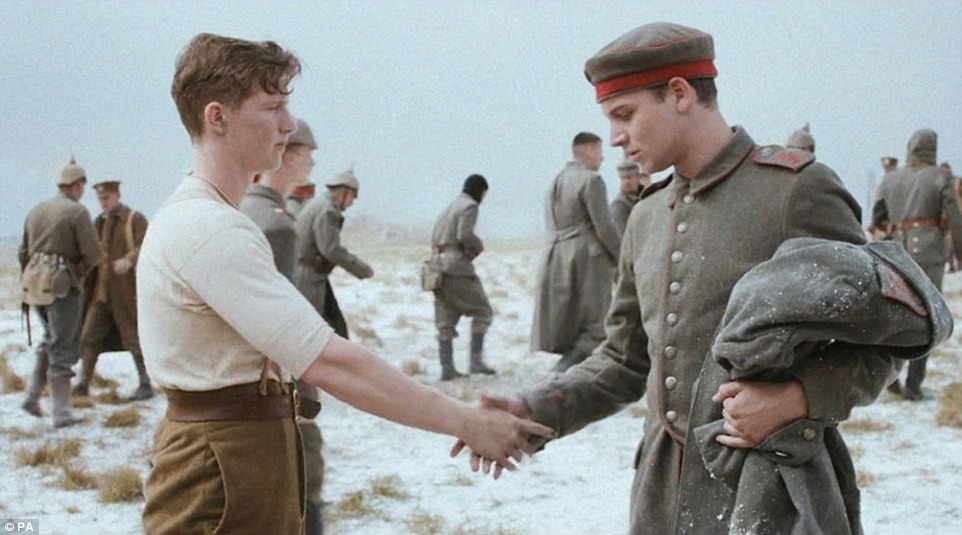

One game of football Sainsbury’s prefer you don’t think about this Christmas

Sainsbury's saccharine Christmas ad
Sainsbury’s saccharine Christmas ad

It was with some interest that I watched Sainsbury’s much-hailed Christmas ad.

Depicting the game of football between German and British troops on 25 December 1914, it shows soldiers acting in a conciliatory, noble, sporting fashion during a time of war. It shows that our similarities are greater than our differences. It shows that the great game of football can bring even the most implacable foes together.

Sainsbury’s, of course, would not be so crass as to use that most poignant moment to sell spuds or cut-price bevy. It isn’t doing that. (In fact, I am not going to use ‘it’ to describe Sainsbury’s, even though it is grammatically correct; I am going to use ‘they’ to humanise this multi-billion pound company. Make Sainsbury’s more cuddly for you.)

Kind and caring Sainsbury’s, as the main plank of their corporate social responsibility strategy, are using the advert to get you to go into their stores to buy a bar of chocolate, the profits from which will go to the Royal British Legion.

Sainsbury’s have been roundly praised for their ad. Why? Well, it gives the viewer a warm glow about Our Boys. It also, in turn, softens Sainsbury’s image, and puts them on the moral high ground.

You come away thinking – Sainsbury’s: they really are there for the lads fighting in World War One. What, on the other hand, are Lidl doing for the boys in the trenches? Fuck all, that’s what. On that basis, I shall never shop in Lidl again – despite their chocolate being rather tasty and reasonably priced.

(You’ve guessed it, people. I shop at Lidl. The customer service is dreadful but the cheese-crusted rolls are DAYYYUUMMM! And 25p a pop. On the other hand, their broccoli never seems to go off, which is inexplicable and not a little troubling. But very cost effective.)

Typical fun-loving Lidl customers

Where was I? Oh yes. Sainsbury’s Xmas ad. What did I think?

I thought it was too long, I thought it sugar-coated war (literally) and it made me feel a bit sick. But on the credit side, you have to admit that Sainsbury’s have adroitly chosen which game of football to tickle the British public in its emotional G-spot.

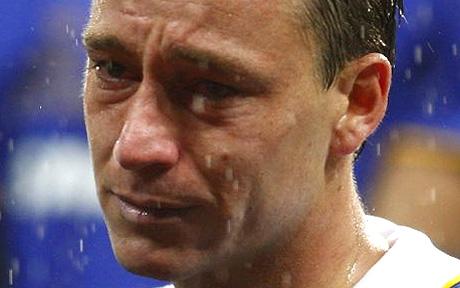
Because they didn’t choose QPR’s stirring comeback to salvage a 2-2 draw at Stoke City earlier this season – magnificent though the Super Hoops were that day under the inspirational and saggy-faced leadership of Harry Redknapp. They didn’t even choose John Terry crying in the rain after the 2008 Champions League final (an image that, six year later, still gladdens my heart and prompts me into prolonged bouts of hedonistic consumerism).

John Terry crying in the rain

But there was one game of football which could have made the cut. And no doubt it was a close-run thing.

This game of football was also well-publicised.

It was also informal – no one really cared about a winner.

It was also during a time of war. But the players were not participants in the war. They were children, having a kickabout. On a beach.

Remember those boys? The Palestinian boys on the beach? They got killed by Israelis who mistook children having a kickabout for murderous, foaming-at-the-mouth jihadis. An easy mistake to make and one I’m sure we have all made on the beach in Torremolinos.

“Look – there are some boys playing football.”
“Yes, but are those boys also vicious jihadis intent on annihilating me, my mum and all of civilisation?”
“KEERRRISST! Probably they are – let’s bomb them now and sup freedom cocktails later!”

Of course, Sainsbury’s don’t want small children murdered while playing football. It is unpleasant, and puts people off their shopping.

But they do rather like Israel. They buy and supply Israeli products – products which, depending on if you share the UN’s view on the matter, are often made on stolen Palestinian land. They help prop up a country which is in perpetual war against people living in what has been described as the world’s biggest prison camp.

Sainsbury’s might think that the Israeli state should be supported. That’s their call. But they are a big company. They could continue trading, and also say:

“Hey, Israel. Would you mind, if it’s not too much bother, trying a teensy bit harder to not kill children? You know, by not firing missiles at them and stuff. Lovely houmous, by the way.”

Sainsbury’s could support charities that help the people of Palestine, or indeed charities which support people in countries where our troops so often go to liberate the natives. They could, without a snazzy ad campaign, speak out to steer Israel towards a more humane approach when dealing with human beings living in the Gaza Strip.

If they did try to make a difference, not by romanticising a century-old conflict, but by taking practical action to improve the countries with which they so profitably trade, in places such as Israel, then that would truly be corporate social responsibility. And that would give me a warm glow this Christmas.

In the meantime, however, I’m off down Lidls to buy some of their no doubt questionably sourced chocolate instead.

Pete The Temp’s amusing video on Sainsbury’s and Israel.

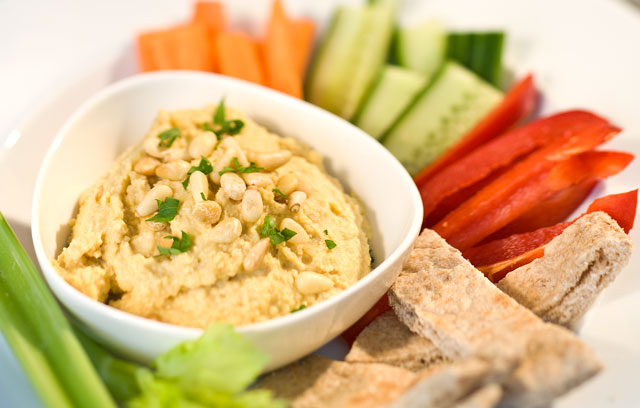
A completely unnecessary but lovely image of a bowl of houmous.

5 reasons why Young Fathers are great Mercury Prize winners (not being George Ezra is one of them)

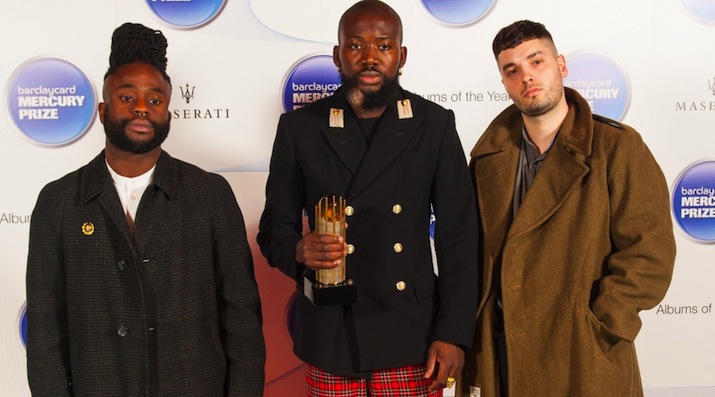
Edinburgh's finest: Mercury winners Young Fathers
Edinburgh’s finest: Mercury winners Young Fathers

I am thrilled that Edinburgh-based rap group Young Fathers have beaten off a particularly strong field to win the Mercury Prize. Their Dead LP is now officially designated as brilliant and I couldn’t agree more. Before I get into my top 5 reasons why their album is great, I want to say: people, listen to the 12 albums on the shortlist, pick the ones you like, and buy them. Young Fathers only got £20,000 for winning the prize, which, by the sounds of the record, will barely cover their annual weed bill. Show some love to the artists, and buy their work.

Okay, here’s my five reasons why Dead by Young Fathers is splendid:

1. Lyrical madness
On the poppiest song on the album, Get Up, one of the rappers says:

“Taking off my clothes at the lido
all I got is my decadent credo”

Which is genius, right? Fair enough, he has to pronouce “lido” leedo to make it rhyme with credo, but when you’ve got that level of mad couplet bubbling up, it would be churlish to quibble about a mispronounciation. Elsewhere on the album, one of the lads starts a rap with the assertive “bish bosh”, rhymes “Liberian” with “Presbyterian” (underlining the band’s Afro-Caledonian roots) and talks about “handing out endorpins to nature’s orphans.” Wordplay is just that – playing with words – and Young Fathers are a rabble playing Scrabble with Margaret Drabble. (This is why I am not a rapper.)

2. They are not George Ezra
Some people, a lot of people, seem to like George Ezra. Why, or even how, I do not know. George Ezra is about as rock n’ roll as William Pitt the Younger. Listening to George Ezra makes me think that he is instinctively in favour of fracking. Not that they care a jot about such chart-topping codswallop, but Young Fathers are the polar opposite of George Ezra. The Mercury judges, in their wisdom, understand this and have given Young Fathers a platform for people to see that there is an alternative to stadium-folk.

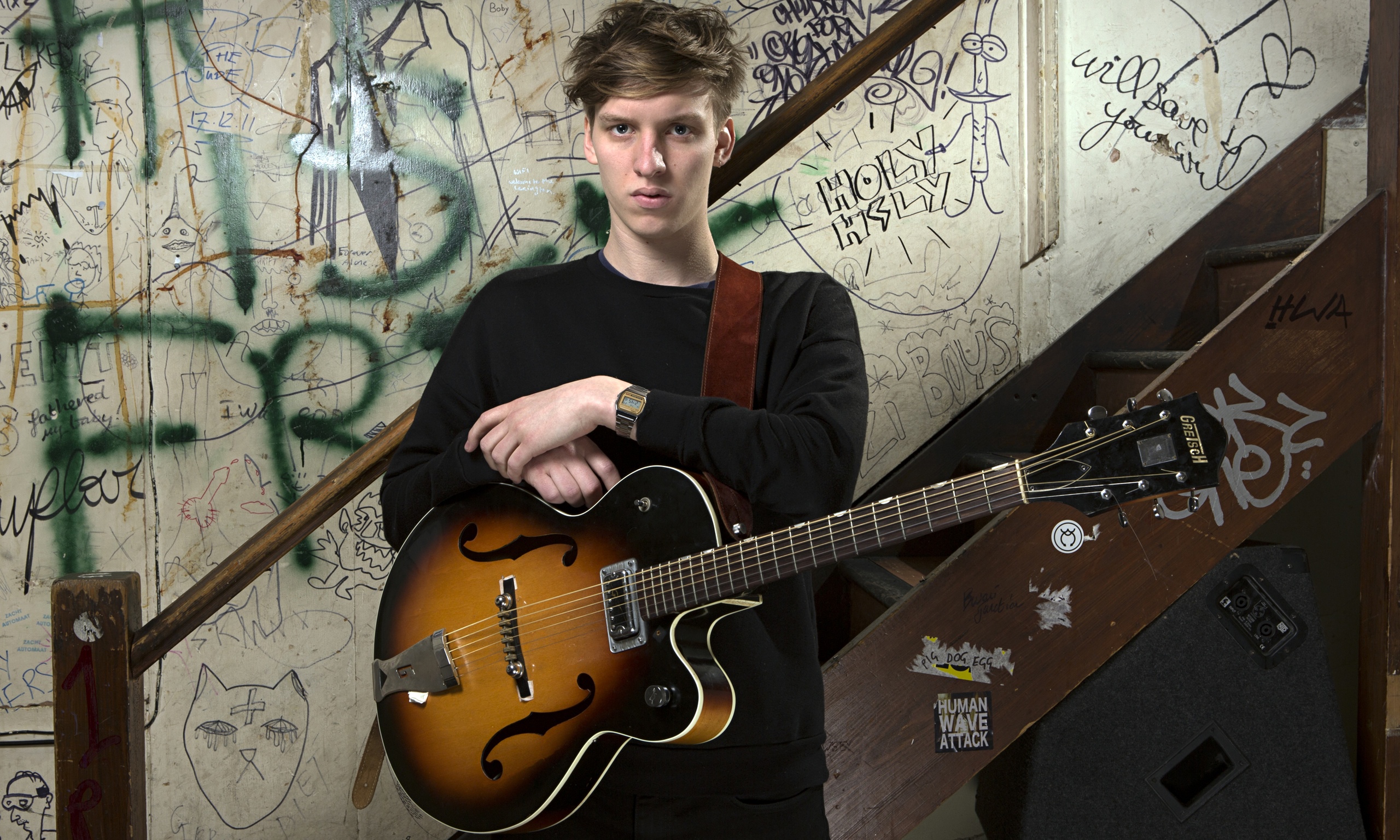
The old standing in front of graffiti to make it look like you didn't grow up in a stately home trick: George Ezra
The old standing in front of graffiti to make it look like you didn’t grow up in a stately home trick: George Ezra

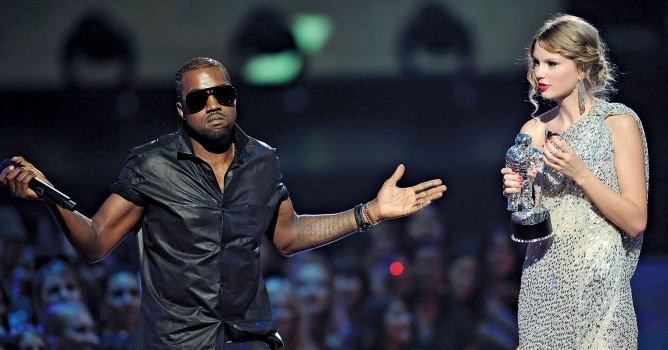
3. They are like Kanye without being complete twats (yet)
On the jollily titled song, War, one of the boys (I have no idea which) starts ranting “you chopping me down like the Amazon” which is the kind of idiotic nonsense Kanye spouts. It’s one of those lyrics right on the borderline between utter shit and utter cool – just like most of Kanye’s. This shows Young Fathers have the potential to be both massive stars and megalomaniac lunatics. I like that.

Note to Young Fathers: it's all right copying Kanye, just leave Taylor Swift alone if you see her at awards ceremonies
Note to Young Fathers: it’s all right copying Kanye, just leave Taylor Swift alone if you see her at awards ceremonies

4. Musically, it is all over the place
Also like Kanye, they take a trawler to the world of music and pick out the bits they like. Hence, the album starts with a bit of squeezebox, which is probably not something P Diddy would have considered.

Other songs sound, in part or in whole, like: The Prodigy; Burial; a particularly violent video game with a moral message like “bad things happen to good people, a lot”; Justin Timberlake after a trip to Guantanamo; Andre 3000; a teenage boy trying to making himself pass out purely through bass noise; gospel without the redemption; Boyz II Men getting mugged at knifepoint, in a sewer, by Teenage Mutant Ninja Turtles; a fat boy farting into a fan. You get the idea. It’s commercial, sort of.

5. It is only 32 minutes long
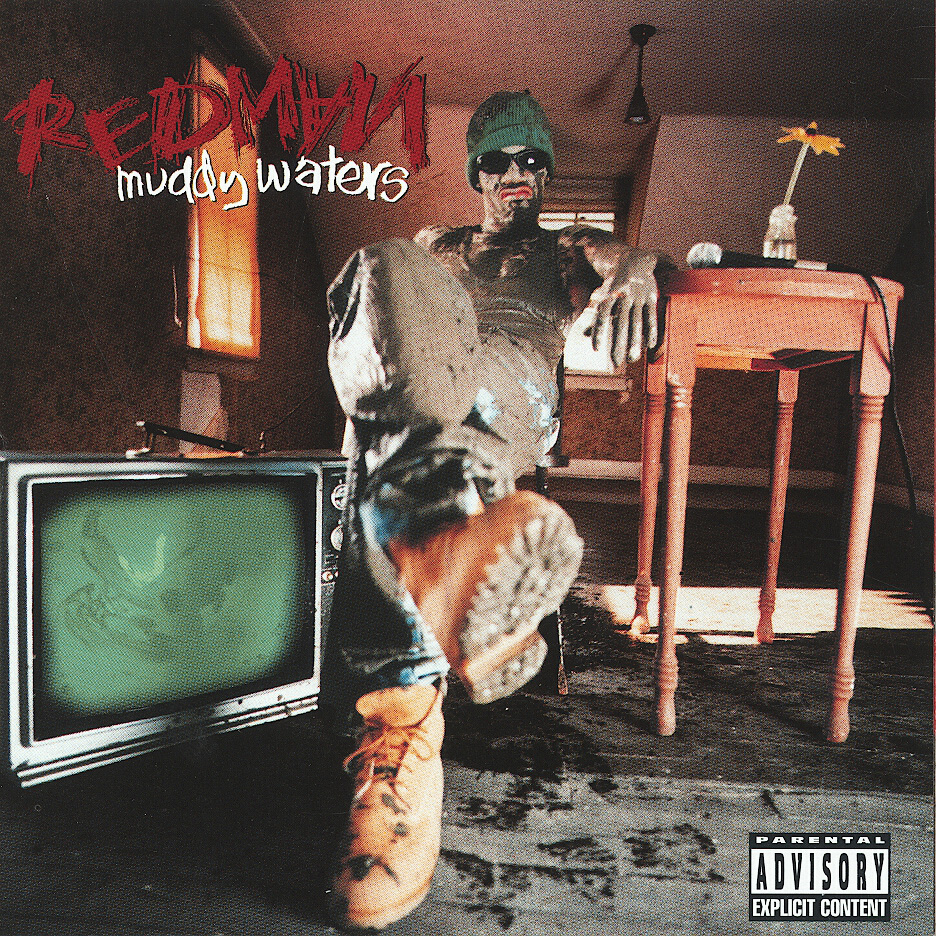
I am not criticising long rap albums. One of my favourite albums is Redman’s Muddy Waters joint, which is about 70 minutes and has more comedy skits than actual songs. In those skits he comes up with such timeless acronyms as NASWIPP (N*ggas Against Smoking Weed In Public Places) and “IKSRFO” (I’m Knocking Somebody Right the Fuck Out), which my life would be a greyer place without.

That said, there is something pleasurable about a rap album finishing its business at just over the half hour mark. Wu-tang’s knowledge god, the GZA, once remarked, “Make it brief, son, half short and twice strong,” and Young Fathers have taken that advice on board.

Of course, the Wu followed up their first album with the unwieldy Wu-tang Forever double LP, which begins with some shambling old dude named Poppa Wu giving a not interesting sermon about fuck all for six minutes. Therefore, I will stand by Young Fathers if they get famous and obnoxious and think it a good idea to get Frankie Boyle to open up their next album with a lengthy diatribe against the English generally, and George Ezra specifically. In fact, that might not be a bad idea.

redman muddy waters

The BBC and UKIP: the best of friends

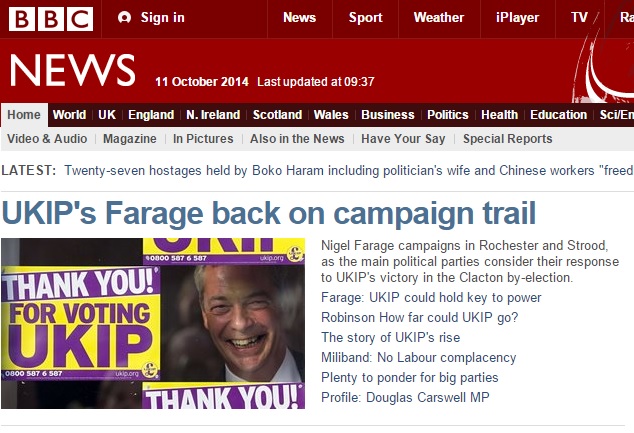
The BBC might claim its news coverage is fair and balanced, but what exactly is fair and balanced about this headline on its front page?

ukip

The headline – UKIP’s Farage back on campaign trail – is almost propaganda. Of course Farage is campaigning for the up-coming by-election in Rochester and Strood. But then so are all the other political parties.

The other associated stories develop this uncritical pro-UKIP perspective:

The first gives Farage free rein to say that he could be in government next May. This is preposterous given that UKIP has only one MP. But the claim is made less preposterous by this blanket coverage.

The second, a piece by political editor Nick Robinson, is typically nuanced, but ends essentially confirming the pro-UKIP stance:

“Maybe but maybe the seemingly ever onward rise of Mr Farage will, as he’s long predicted, continue ever onward.”

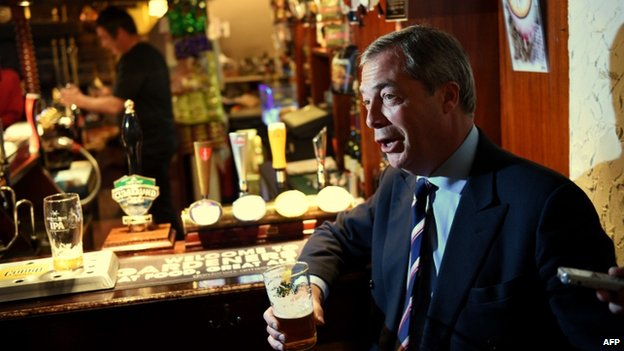
The third is a long profile of the rise of UKIP, again reiterating how they “defy the odds.” It is complete with the standard and necessary picture of Farage in the boozer. (Message: do you drink beer? Here’s a politician who also drinks beer. See how much you two have in common?!)

farage beer

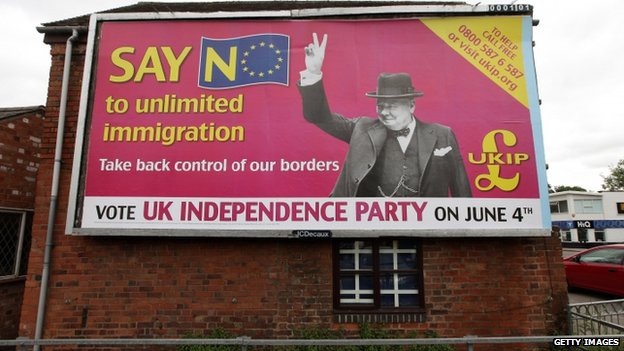
To my dismay, they print a picture of the UKIP billboard advert which uses Winston Churchill to push its anti-immigration message. Having read Roy Jenkins’ 900-page biography of Churchill, there is no doubt in my mind that he would have been appalled by the small-minded, insular attitude of UKIP.

Churchill UKIP

The fourth article is Ed Miliband’s response to UKIP. The FOURTH article in this UKIP bonanza, and the first in which the Labour leader – the party which has won three of the last four General Elections, is quoted at any length. Miliband says that a party which wants to cut the taxes of rich people (such as Carswell and Farage) could not genuinely represent the interests of the working class. Which makes sense, and exposes the contradiction of UKIP’s public face and private ideology.

Having let Red Ed and his band of radical left-wingers have their say in the previous article, the BBC leaves any semblance of criticism of UKIP to one side in its fifth story, “By-elections leave biggest parties with plenty to ponder.” Again, the rise of this extremist party is talked of in excitable terms. While UKIP has had “hype, attention and victories of recent years” it has “never had a night like it.”

It goes on to quote the new, and old, Clacton MP, Douglas Carswell: “We must be a party for all Britain and all Britons, first and second generation as much as every other.” This is plainly untrue. No political party can be for all Britons, particularly not UKIP, which is directly offensive to a large proportion of the country.  This minor quibble is not addressed by the BBC.

Let us imagine that in, let’s say, a northern mill town, a militant Islamist party rose up and gained enough popular support to get an MP into Parliament. Would the BBC be talking in upbeat terms about such a party, and quote its leader extensively and uncritically? More likely, it would talk of the troubling rise of Islamism, and would ask Farage, in the pub over a pint of Spitfire, about his concerns.

Finally, there is a glowing profile of Douglas Carswell MP, in which he is described – not in quotes, but as stated fact – as a “free thinker” a “maverick” and a “moderniser.” These adjectives don’t tally even remotely with the reality: an ex-City worker who has dedicated his life to keeping himself in Parliament and immigrants out of the UK.

To add to the cosy image of Mr Carswell, it is noted that he likes swimming, gardening and making quince jelly.

The profile ends with a quote from Carswell’s victory speech: “If we always speak with passion, let it be tempered by compassion.” The reader is not asked whether a politician whose leader does not want people with HIV entering the country could be considered to be compassionate.

This bumper batch of stories from the Beeb would lead any reader without detailed political awareness to make several conclusions:

1. UKIP is a major political force
2. UKIP is a mainstream political party, which does not hold extreme views
3. UKIP has a good chance of being in Government at the next General Election
4. Douglas Carswell is a brave and noble politician, and a family man, standing up for what he believes
5. Immigration is the major issue facing the UK, not housing, jobs or inequality
6. The Green Party, and the Lib Dems, are irrelevant.

There is no doubt that the coverage from some of the national newspapers, and Sky News, has been even more triumphalist. However, the newspapers are explicitly partisan. The BBC, known as being fair and balanced, is at present covering UKIP as if it was the party of government rather than one with a single MP.

We should remember that David Cameron described UKIP members as “fruitcakes, loonies and closet racists.” Michael Heseltine said that UKIP is racist.

If these two right-wing politicians regard UKIP with such horror, why does the BBC give them so much publicity and uncritical commentary? I do not think that the BBC is managed by UKIP supporters. It is, like all news organisations, enamoured by a good narrative, which UKIP provides: the rise of the underdog, triumphing against the odds; the man with charisma who likes a beer; the fight against the existential threat to our cosy, nostalgic way of life.

It is this narrative that gets UKIP its extensive coverage. But if the BBC doesn’t try harder to provide balance, then it won’t be only the Tories or Labour who are under threat. It will be the BBC’s reputation as a trustworthy news organisation.

Two privately educated men whose only wish is to help the people of Clacton. Carswell and Farage share a joke.

Mercury Prize 2014: the contenders (plus winner prediction)

I have always viewed the Mercury Prize with suspicion. The most salient reason for my suspicion is that M People won the award in 1994 with their soul-sapping soul album, Elegant Slumming. If that is what it takes to win the thing, it raises the question, what were the judges looking for? An album to make children realise there is no hope?

Fortunately, things couldn’t get that bad again. Even in 2007, when the frankly shocking Klaxons won, the British people could rest easy in the knowledge they weren’t as bad as M People.

This year’s nominees have been picked with a caution appropriate to an award sponsored by Barclaycard. (Note to Sleaford Mods: stop being so working-class, and so angry, and you might have a chance.) However, the list of nominees is rather exciting. Yes, there is a fair amount of turgid rubbish – but at least it is turgid rubbish we can hate with some vigour. And there are four or five albums which are very good, two outrageously so.

I have waded through Spotify listening to this stuff, and here is my summary of the runners and riders:

Damon Albarn – Everyday Robots

Listening to this album is like watching Ryan Giggs play football over the past few years.* Damon’s a bit slower than he used to be, but still better than most, and occasionally spectacular. Here, he has assimilated his work on soundtracks, world music and even opera to potent, if restrained, effect on this sumptuous, sighing, swooning album.

*NB: Not like Ryan Giggs’s private life. That would have been a WHOLE different album, probably by Chris Brown. And R Kelly. And Goldie Lookin’ Chain.

Not a very good cover, but a very good album

Jungle – Jungle

The people in this group have named their band and their album Jungle, yet they do not produce jungle music. That’s a devious, deceitful moniker they’ve adopted, like opening a public school and only letting in rich people. In any case, their bland, superficially cool “soul” music sounds like something Huw Edwards would listen to while taking his mistress for a drive in the drop-top on a Sunday.

Anna Calvi – One Breath

Music for people who like Fleetwood Mac, and want to take a bold step into the future.

Anna Calvi: a boring person dressed up as an interesting person

Royal Blood – Royal Blood

Murky thud-rock, the sound of a growly fart endlessly shuddering through your bowels. (I’m a vegetarian. I know.)

Despite this, it appears the record industry has decided Royal Blood are the rock band of choice for the next 6-12 months. Therefore, there is every likelihood we will see this witless duo prowling through the UK’s larger live venues, acting with all the subtlety and bonhomie of an underfed, undersexed invading army. Talking of which, I reckon this music would be hugely popular with the Russian army (although, on second thoughts they’re all probably listening to the new one from U2. Or, more likely, Living on a Prayer).

If you think this picture is dull, listen to Royal Blood's album
If you think this picture is dull, listen to Royal Blood’s album

FKA Twigs – LP1

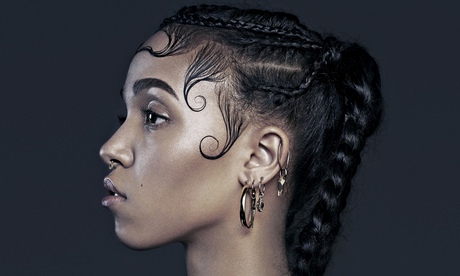
I don’t know what she’s singing about, and I don’t care. FKA Twigs sounds filthy, and weird, like Bjork has gone up to heaven and done an album with Aaliyah. Marvellous.

Praises to FKA Twigs

Nick Mulvey – First Mind

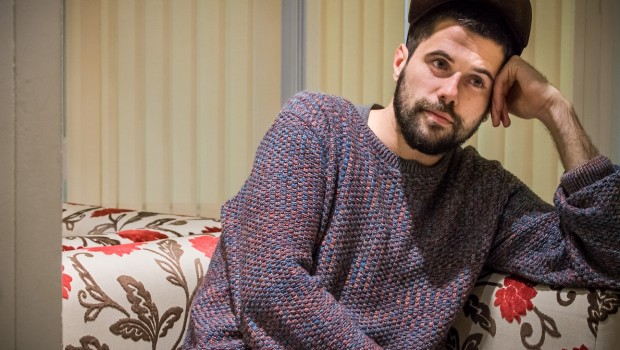
The kind of hellish folk music that makes me want to start a riot in Waitrose and set the Cotswolds on fire. I tolerated track one. On track two he rhymed “sadness” with “gladness”, at which point I switched off, fearing further provocation.

The photographer asked Nick Mulvey to look like he was thinking

East India Youth – Total Strife Forever

Brilliant minimalist electro-folk. I don’t have anything witty to say about this. Simply a very good album, with a lovely mix between vocal and instrumental tracks. A proper reviewer might call this an unalloyed joy.

Polar Bear – In Each and Every One

A work of genius from start to finish. The only album on this list I would declare a masterpiece. However, to give some context: that is an electro-jazz masterpiece. Which means, if you like Bitches Brew, Detroit techno, and a bit of freak-rock, then this is right down your alley. If you like tasteful middle-of-the-road rock such as Anna Calvi, this might make you run for the Anderson shelter (and if you haven’t got one, gawd help you!).

Bombay Bicycle Club – So Long, See You Tomorrow

Music I would be excited about if I hadn’t heard any other music.

Kate Tempest – Everybody Down

Kate Tempest picks up awards as regularly as I pick up houmous from Londis. That is, about three to five times a week. The woman, while being a poet and rapper with a rare gift for storytelling, has somehow been designated as having a higher purpose: to win awards. I tend to hear about awards because Kate Tempest has won them. I am therefore going to stick my neck out and say, as this is an award, and Kate Tempest has been nominated, she will win it.

There are good reasons for her winning. Her poetry feels urgent, visceral, and vaguely zeitgeisty. She has turned a marginal interest – poetry – into something which can be heard on Radio 1. This is good for everyone, including myself, in the spoken word scene.

Her show, Brand New Ancients, was the best thing I saw on stage last year. That said, I’m not quite such a big fan of this album. It is well above average, but the interplay between words and production is not as seamless as, say, Young Fathers (see below). Over here is the music. Over there is Kate. They are good, but separate. It is still a solid album, however, and, more than likely, an award-winning one.

And the winners is...
And the winners is…

Young Fathers – Dead

If OutKast were from Edinburgh they might sound like this. Young Fathers prove that the Scots are pound-for-pound the best songwriters on earth. This is dark, uncompromising rap music, yet always tuneful, musically fantastic, and often surprising. A welcome antidote to commercial UK rap. And only 34 minutes long.

GoGo Penguin – v2.0

Just jazz. As in Just Juice. It’s Just Jazz.

SCOTTISH INDEPENDENCE: FROM WHAT, FOR WHAT?

Interesting blog on the implications of the Scottish independence debate and what they mean for the future of the political process

Kenan Malik's avatarPandaemonium

duncan riders

There are two fundamental issues at the heart of the Scottish independence debate: Independence from what? And for what? The answers to both questions seem obvious. Independence for Scotland means independence from the UK, or, more specifically, from rule from London. And it would be independence for Scotland to pursue its own policies. Dig a little deeper, though, and we find that the answers are not nearly so straightforward.

The nationalists seem strangely reluctant truly to break away from Westminster. The SNP wants, for instance, to keep the British Queen as the head of state – a more potent symbol of an undemocratic system and of ‘London rule’ it would be hard to imagine. It wants also to keep sterling as its currency, a policy which would hand the Bank of England and the British Chancellor of Exchequer considerable control over the Scottish economy. For all the talk of breaking…

View original post 1,252 more words

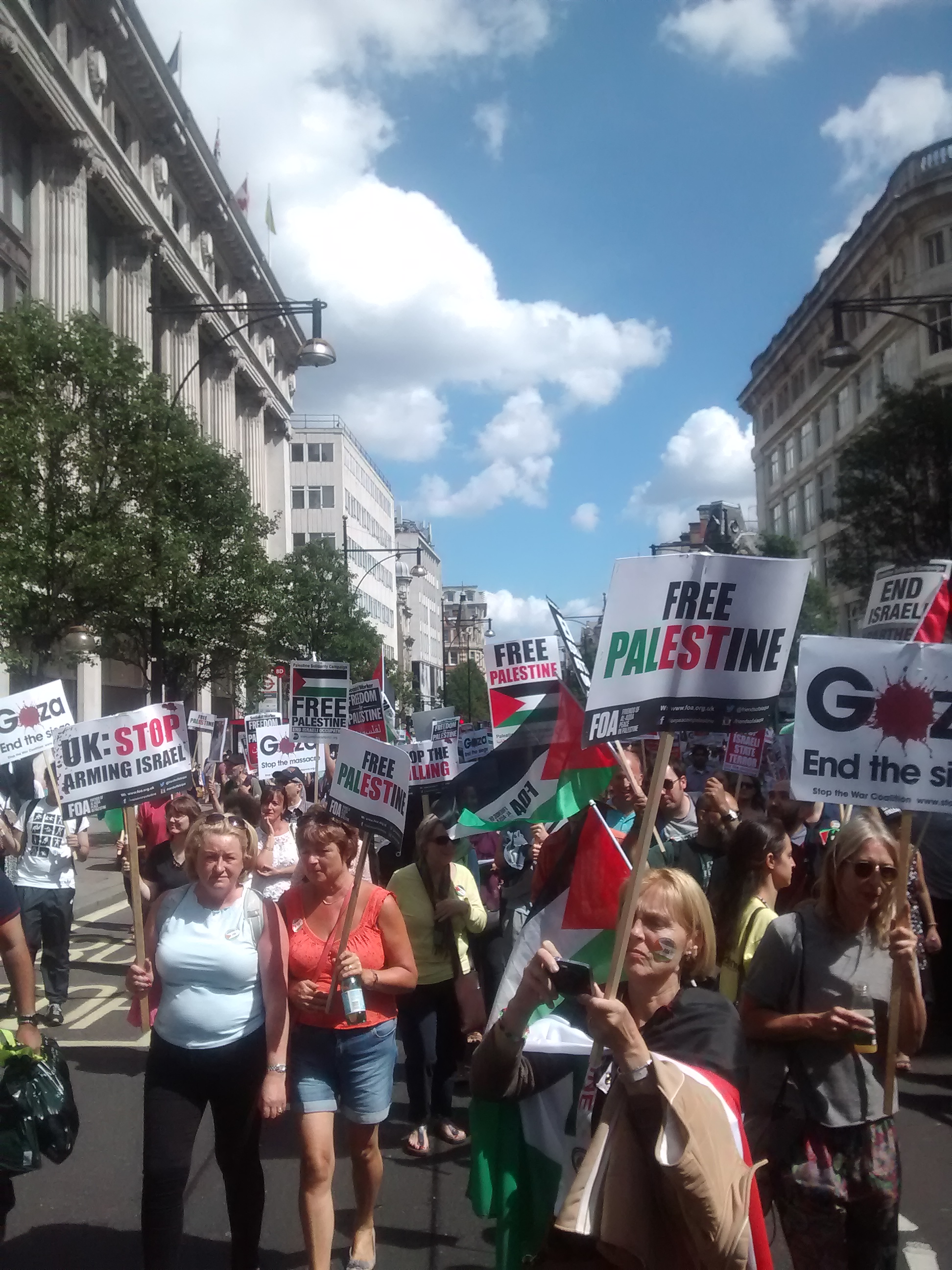
Stop The War march for the people of Gaza: 9th August 2014

Protest for Gaza on Oxford Street
Protest for Gaza on Oxford Street.

I don’t go on a lot of protest marches. In fact, the only big, proper protest march I have been on was the one in favour of fox hunting, when I reported on it for the Hastings Observer.

Today’s march was similar, yet different. It featured the same good-natured canter through London’s beauty spots, adorned with placards, whistles and slogans. But while that rally was defending human’s right to kill foxes for fun; this protest, in contrast, defended human’s right not to be killed (for fun, or otherwise).

I attended for several reasons:

a. Seeing those boys killed on the beach when they were having a kickabout was horrific
b. Our government has not condemned the killing of children, even those in UN shelters. We have been less critical of Israel than any other nation on earth, including the US. I wished to show that this “do nothing” approach is not a vote-winner
c. I was interested to see who was on the march, and why they were there.

When I pottered down to Portland Place, I was pleased to see that there was a significant crowd gathered. Not nearly as many as pitched up against the foxes, but still tens of thousands.

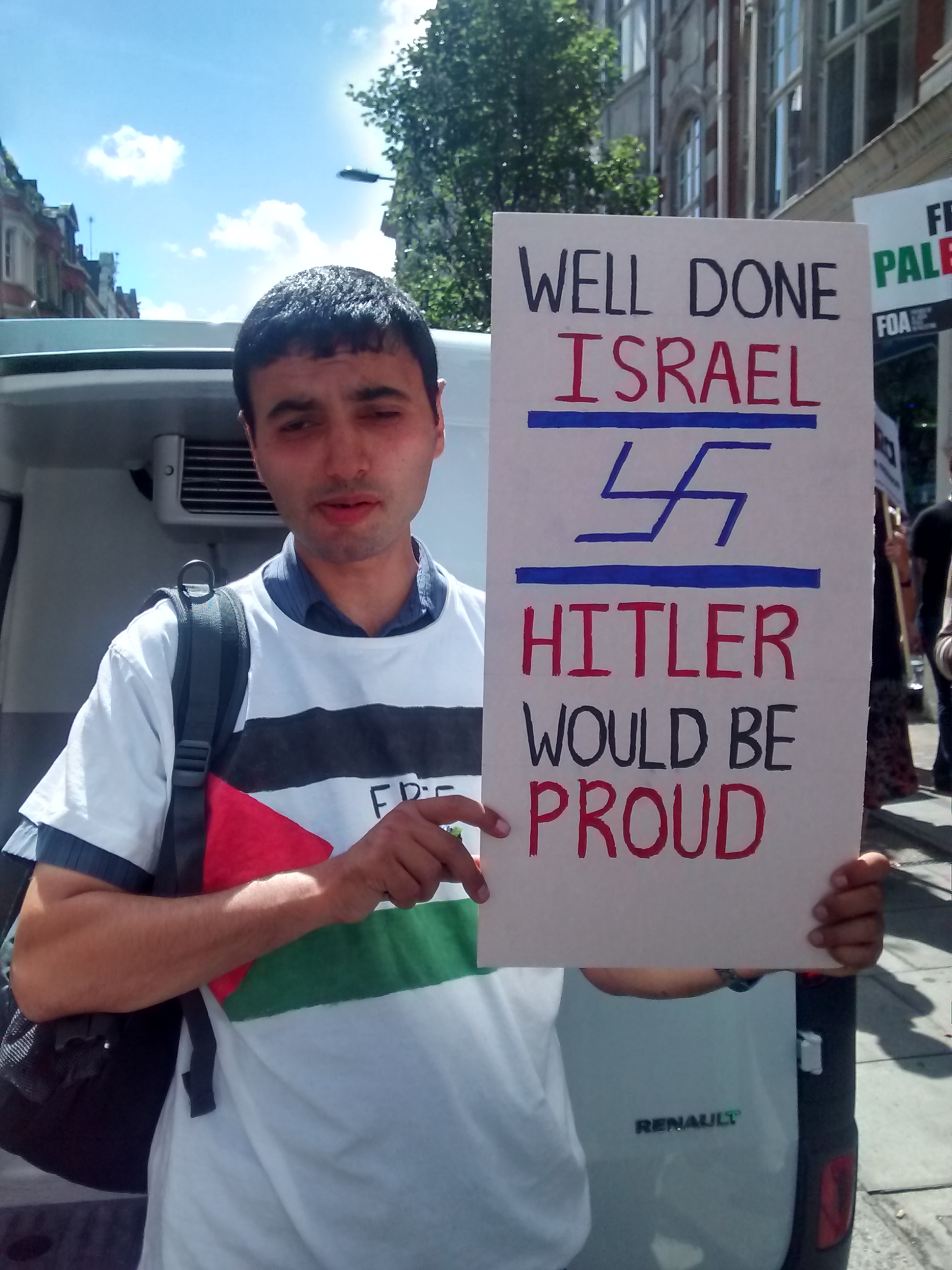
Almost the first person I saw was a young man pulling out a placard which conflated Israel’s actions with the Nazis. I asked for a photo, then explained that I found his sign insulting (idiotic, would have been nearer the mark). I was soon joined by a Jewish man who said much of his family was killed in the holocaust, and he found the sign offensive and insensitive.

We got tangled up in an extremely polite argument, in which it became obvious that the man had a very loose grasp of history, and was beginning to regret bringing the banner out. I slipped away as they carried on their debate, and am glad to say, I did not see another banner of that kind for the rest of the afternoon.

IMG_20140809_121302916_HDR

The people gathered outside Broadcasting House, in criticism of the BBC’s reporting of the conflict. I don’t think its reporting has been as bad as people have suggested. However, the BBC’s problem stems from two factors: a timidity in asking hard questions of Israel; and editorial guidelines which demand balance. That approach doesn’t work when the conflict itself is so desperately unbalanced.

(The BBC did bother to report on this protest, while neglecting to mention that it was the object of part of it.)

I bumped into a fellow QPR fan, who acted as a timely restorative after my previous encounter. We discussed another grave, internecine conflict: between Joey Barton and Adel Taarabt, before he handed me a socialist leaflet and tottered off. To my surprise, and pleasure, I noticed West Ham and Chelsea fans carrying banners in support of the people of Gaza. This is good not only because it shows football supporters standing for something more than their team, it shows how many different types of people feel strongly about this issue.

Chelsea fans supporting Palestinians

I next got talking to a mother of three from south London, who was pushing two children in a buggy, and carrying a tiny baby in a sling. She said, simply: “I hope we can make a difference. I hope we will be listened to.” We had a lovely chat where she explained her determination to come out and show her support, despite having three children. “You have got to do something,” she said.

We strolled down Oxford Street, when I noticed people were directing their ire towards Marks & Spencer. I asked a man chanting what the issue was, and he said: “They are Jewish. They support Israel.”

An elderly lady, who was marching with a friend, timidly said: “I’m a bit concerned they are just attacking Jewish businesses.”

We walked around the US embassy, which saw people shouting: “USA, shame on you” to a large, unimpressed building, with a bored-looking security guard stood outside.

As the march progressed towards Hyde Park, I found myself alongside a man who was enjoying using his loudhailer to start chants, a bit croakily by then, along the lines of: “In our thousands, in our millions, we are all Palestinians.”

To which I didn’t reply: “No, I am not a Palestinian. I am Richard Purnell, a one-half Jewish, one-half Yorkshire, one-half Essex man who is putting aside his great and ongoing need for attention and applause to spend a few hours cantering about the streets of London to draw attention to the plight of the Palestinians, not to you, you mindless sloganeer.”

Which is perhaps why I don’t go on many marches.

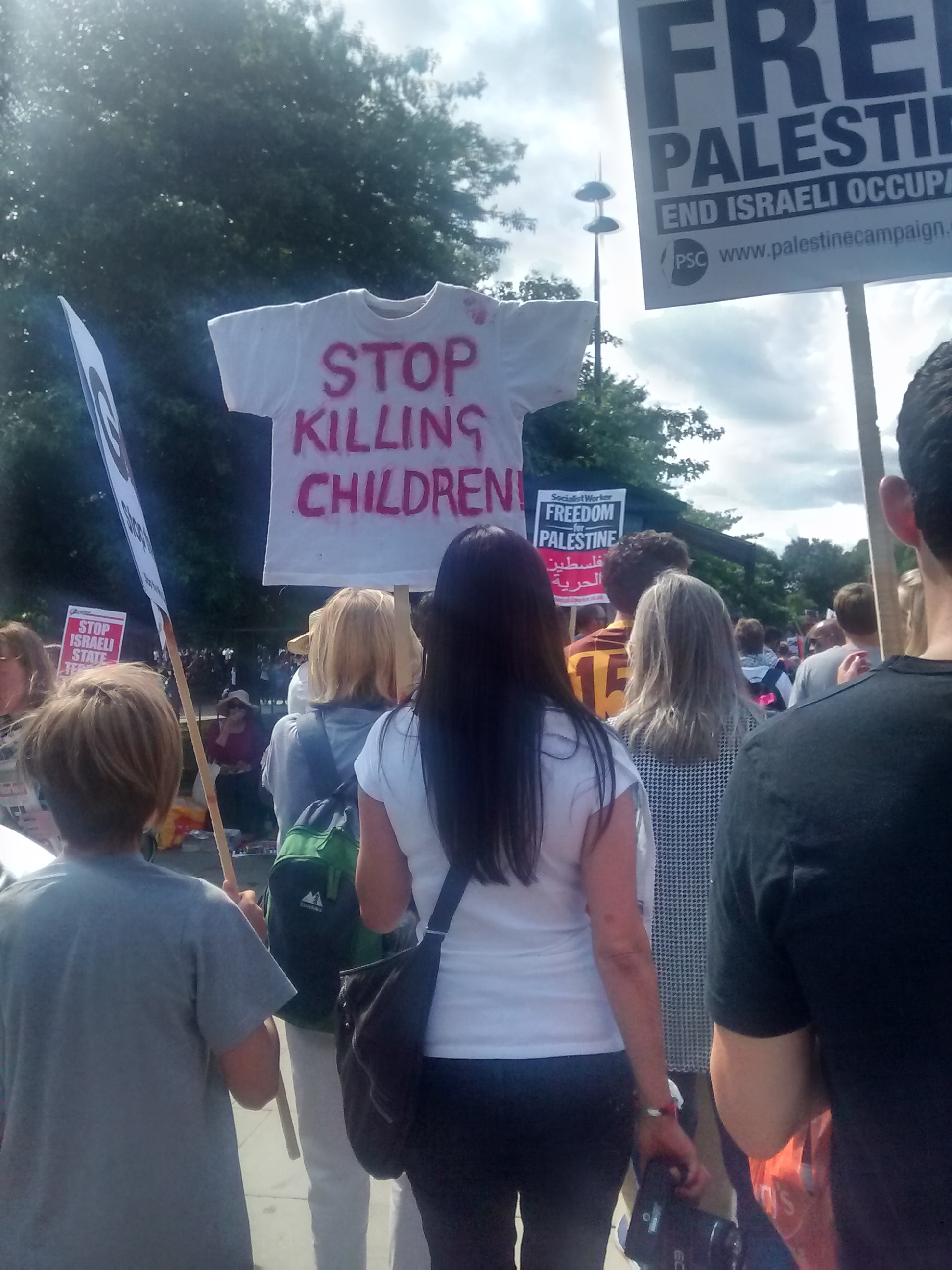
That said, I am glad I went on this one. I saw mums, dads, teenagers, old people, business people, tourists, from just about every walk of life, walking through the streets to show support for fellow humans suffering a very obvious injustice.

I am not presuming that much will come of this protest. After all, the protest to defend an Englishman’s right to frighten the life out of foxes came to nothing.

However, simply to see that there is a groundswell of support for the Palestinians, which today is less easily ignored by our Prime Minister, made it worth it.

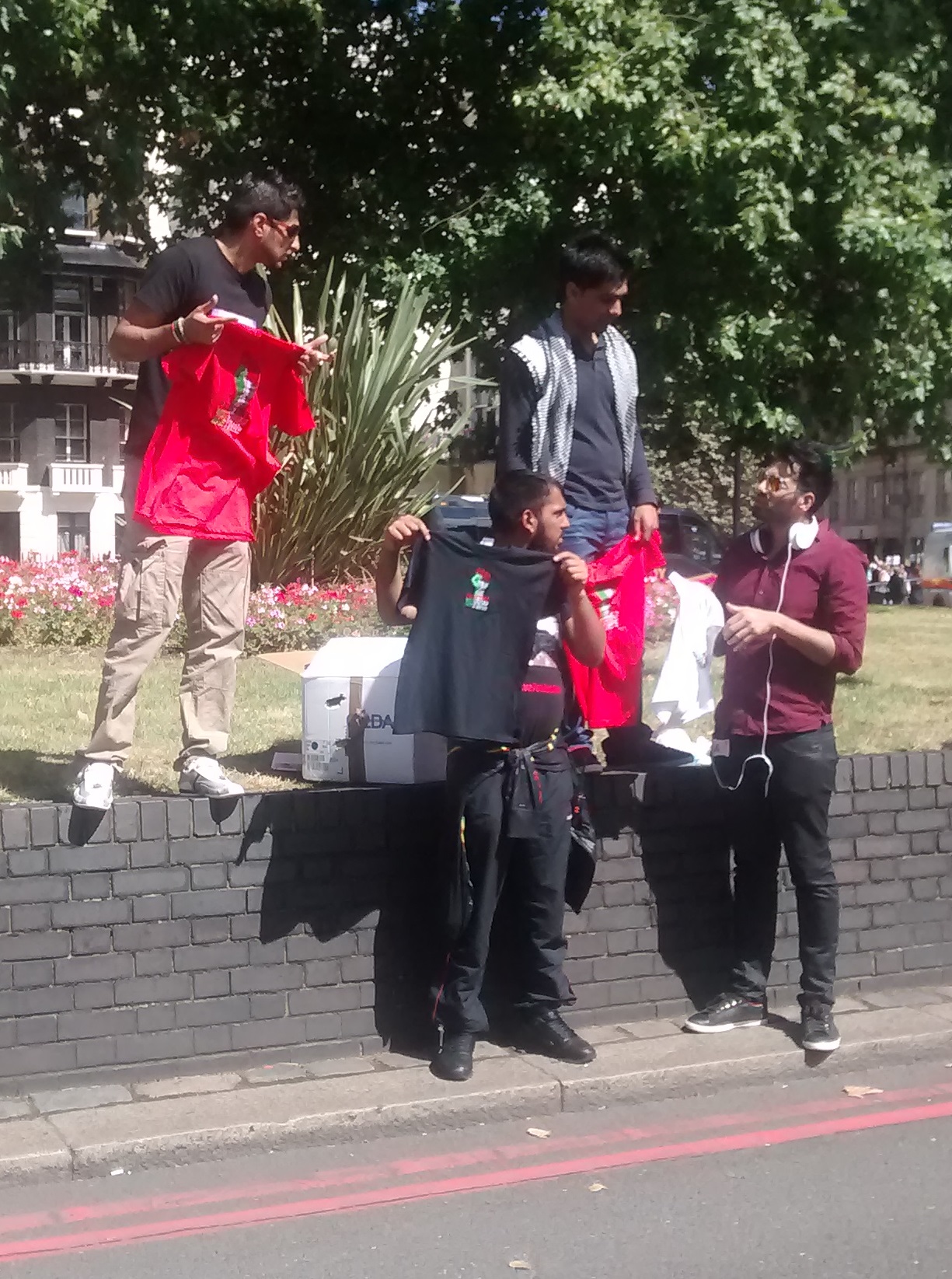
Del boy would be proud - chaps selling Palestine merch
Del boy would be proud – chaps selling Palestine merch
What is boils down to
What it boils down to
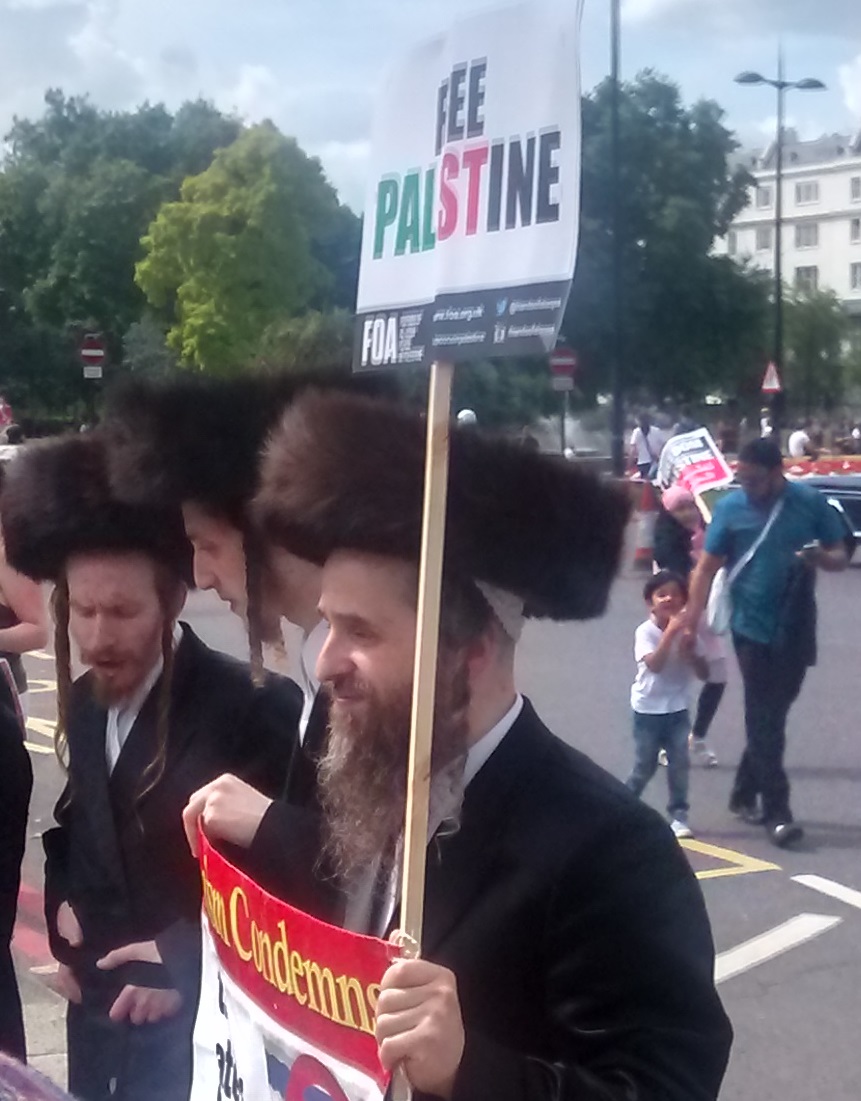
Orthodox Jews on the protest

No worries: a poem

Do you remember when everything was good
those good times, when the good things happened
what were you, six, nine, eleven, fifteen
that age, when only the fun things mattered
like skateboard tricks and scootering
and decisions never got harder than
how many scoops and what type of ice cream

Do you remember, tv was good back then
the good guys were good looking and felt like your friends
friends that were funny, and caring too
and in the movies things exploded but your hero made it through
do you remember when everyone used to make it through?
wouldn’t you like everyone you love to just make it through?

No worries, that’s what I’m standing for
a good future where worries are no more
adults encouraged to play video games
not new ones, the old ones, like we used to play.
Do you know what else I would like to do?
Bring back those bands which spoke to you
when you were that age when music still spoke to you

If that is the safe space you want to return to
there is one little thing you have got to do
one morning, on a Thursday in May
I’ll drop off dvds and your favourite food
you gather your mates and play all day
and keep them away from the voting booth

the next day, there will be a new improved truth
the news will all be good news
or maybe just cartoons
yes, instead of news we’ll just have the funnies
and I promise you this
my friends and I will take care of business
and for you, my friend, there will be no worries

no worries

A letter to Guy Garvey, of the popular balladeers Elbow

c/o
The Middle of the Road
Manchester, England

Dear Mr Guy Garvey,

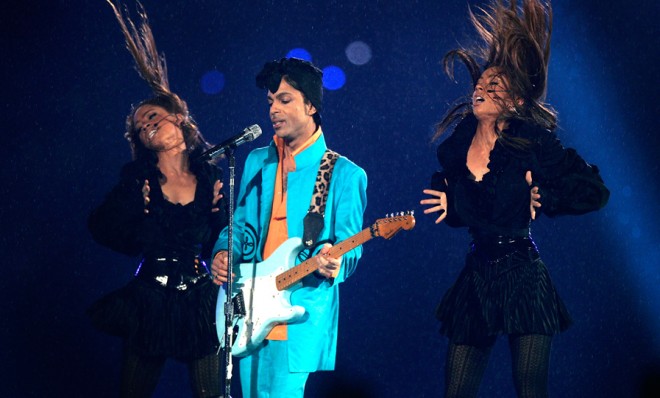
I went to see Prince in concert the other day.
He appeared in high heels, skimpy blouse,
and a manfrock made of velvet and lace,
a suggestive grin all over his face. He was
accompanied by Amazonian dancing girls,
wearing almost nothing bar a pair of roller skates.
I’m not quick to criticise, Mr Garvey, but,
between you and I, it was an absolute disgrace.

His lyrics, meanwhile, were boastful and dishonest
talking about “Purple Rain” and a “Little Red Corvette.”
If only you had helped him, he would have
come up with something decent, more modest
about meeting a slightly pretty divorcee,
at a black pudding stand in Bury market,
and driving her home in a second-hand Corsa
through normal, northern-coloured rain

That wasn’t the worst of it, I’m afraid.
After a costume change, he performed a song which,
if I am not mistaken, was called Soft and Wet,
the dancing girls pawing at his exposed, hairy chest
which display of prurience, I’m sad to say,
gave me a strange swelling between the legs
something which assuredly did not happen
the last time I saw Elbow at Manchester GMEX

I’m telling you, Mr Garvey, by the time that little imp
had finished performing I was dangerously aroused
when I got back home I had to listen to your entire
back catalogue to calm myself down

Mr Garvey. Please show Prince the error of his ways.
Have a word with him, man-to-man, over a packet
of pork scratchings and a pint of real ale. Tell him,
gently, like a portly, northern Gok Wan:

“Prince. If you want to become a man of the people,
with a string of solid yet unspectacular albums
and, potentially, your own show on BBC 6 Music
you need to follow Guy Garvey’s three-step plan.

1. Dress more ordinary, not like a girl
but in loose fit jeans and lumber shirts
2. Get rid of that funky afro; replace it with
a nice monobrow and pudding bowl
3. Stop performing like an eroticised Cocker Spaniel.
Perform sensibly, like me, as if you’re idea of fun
is reading a fridge freezer owners’ manual.”

Because watching a pop star on stage should not
undermine anyone of mixed ability. It should
be like watching telly on the sofa, with more
extensive toilet facilities. At the end of a concert,
people should know that all dreams are feasible,
all dance moves achievable, all footwear
comfortable and, something you demonstrate
brilliantly, Mr Garvey, all waistlines expandable.

Yours, dreaming of a more normal, ordinary future,

Richard Purnell

Chicken drumsticks or Kievs for dinner? - Guy Garvey has a quiet moment on stage
Drumsticks or Kievs for dinner? – Guy Garvey has a quiet moment on stage
A disgusting, prurient display - Prince in concert
A disgusting, prurient display – Prince in concert

Who’s worse – Shearer or Suarez?

A day after Luis Suarez bit Giorgio Chiellini, the little Uruguayan finds himself, improbably, on the moral high ground.

Not due to anything he has done, of course. Biting an opponent is wrong. He knows that; so does everyone else.

But how wrong is it? You would think, listening to the intemperate reaction of the BBC’s suite of pundits, that it put him in the Harold Shipman league of criminals.

Alan Shearer says that Suarez should be banned “for as long as possible.” (Is that until death or does it include any potential after-life, Alan?)

I wonder what Shearer would say if Suarez had, instead of biting an opponent, which caused Chiellini almost no discomfort, kicked a player in the face when they were lying on the ground. Considering that sort of attack would inevitably have greater force and greater chance of injury, that must be worse, right?

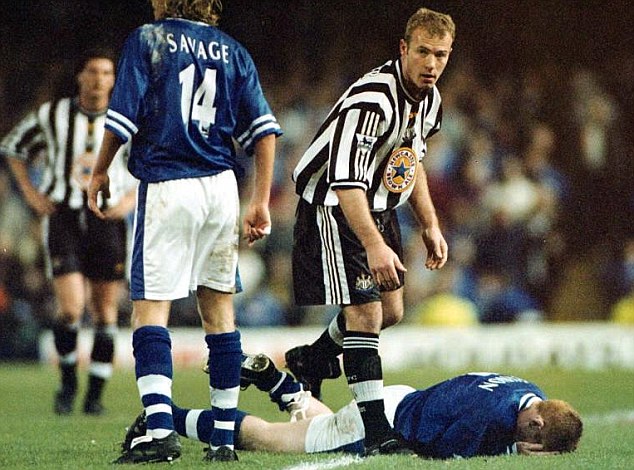
Of course, lovers of English football will know that I am referring to Shearer’s own attack on Neil Lennon during a match between Newcastle and Leicester City in 1998. Shearer, then England captain, received no punishment for the incident. An enquiry, which heard from then-England manager Glenn Hoddle, decided there was nothing much in it.

As Shearer was England’s most important player at that time, the FA saying that he was not guilty had more than a faint whiff of self-interest about it. An England captain, it was decided, would not do that sort of thing. Shearer, reported the enquiry, “swinging out with his left leg was a genuine attempt to free himself.” Which is a bit like the old joke by Bill Hicks about the officers who attacked Rodney King, saying that if you played the tape backwards you could see the officers helping King up and sending him on his way.

Sitting alongside Shearer was Robbie Savage, who had got away with kicking opponents “so many times,” according to Thierry Henry. Savage said that Suarez should “never play international football again” which, considering he is 27 years old, would amount to a ban of anything up to 10 years.

"Yes, I saw you, but I won't say anything" Shearer and Savage in their 90s heyday.
“Yes, I saw you, but I won’t say anything.” Shearer and Savage thuggin’ back in the 90s.

That would be by far the worst punishment for any player in the history of football, worse than Eric Cantona’s nine month ban after he karate-kicked a Crystal Palace fan in 1995.

These double standards typify the British approach to punditry, where our lads are forgiven whenever they err in judgement, where the foreign player, such as Suarez, gets met with fury and calls for him to be driven out of the game. This lingering feeling of British exceptionalism, that we don’t dive, and are morally more upstanding, in the face of all evidence to the contrary, is part of the reason that other teams inevitably seem to play that little bit better against us.

(That, and our war-mongering. One of the main reasons Maradona was so motivated to do well against England in the 1986 World Cup was in response to the injustices meted out to his countrymen during the Falklands War. Therefore, while his second goal, where he took on the entire England team is more celebrated, his Hand of God goal, where he hand-balled into the ball into the net, is his personal favourite.)

Why ever would he want to cheat against blameless England? Maradona in 86

While Shearer and Savage declare that Suarez should be banned for anywhere between life and as long as possible (whichever is longer) they should be honest and admit that this incident, while unsavoury, is no worse than the darker moments of their own careers. And perhaps they should spend less time attacking Suarez and more time contemplating why Uruguay, a country of fewer than four million people, should produce a football team which, according to the evidence of last Thursday, is comfortably better than our own.